The path to a safer future – why technological innovation is key to successful mine clearance
Landmines continue to present a persistent and constantly evolving global threat, and advances in technology are improving how the challenges posed by minefields are managed, while reducing risks to human life. The growing capabilities of autonomous and robotic systems, coupled with advanced sensor capabilities, are now fuelling industry’s responses to this pervasive danger.


Brought to you in partnership with Pearson Engineering
The scale of the landmine challenge is clear. According to the Landmine and Cluster Munition Monitor, at least 57 states worldwide are contaminated by antitank and antipersonnel mines or other explosive devices.
These have devastating impacts on local populations. At least 6,279 casualties from landmines and explosive remnants of war (ERW) were recorded in 2024. Of these, 1,945 were killed and 4,325 injured, with the outcome unknown for the remaining individuals. The vast majority (around 90%) of recorded casualties were civilians.
“Mines are a long-term danger, but the threat is going nowhere,” said Ian Bell, CEO of Pearson Engineering. “We need scalable solutions that can make a real impact today.”
Global impact
Pearson Engineering has played a leading role in addressing the mine and ERW scourge for decades. It has long supported military mobility through its minefield breaching tools, from Full Width Mine Ploughs to Route Proving Rollers and dedicated mine action vehicles.
These systems are having a material impact around the world. For example, the Ukrainian Armed Forces are utilising the company’s equipment to address the huge threat of mines laid during the war against Russia. Among those deployed are the remote-controlled MineWolf 370 (MW370) and a selection of interchangeable Front End Equipment attachments that enhance the mobility of armoured vehicles and enable minefield breaching
Innovations in automation and robotics build on this foundation, reducing risks to personnel and enhancing efficiency across the complex modern battlespace.
This is represented through two new solutions that Pearson Engineering will display at Eurosatory 2026: the MW370 Next Generation (NG) uncrewed mine and route clearance system, and the Threat-Sense advanced detection and classification package.
Rapid clearance
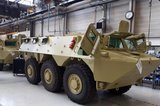
The latest entry in the proven MW370 family, the NG model delivers extensive upgrades to optimise the effective removal of antitank and antipersonnel mines across large areas.
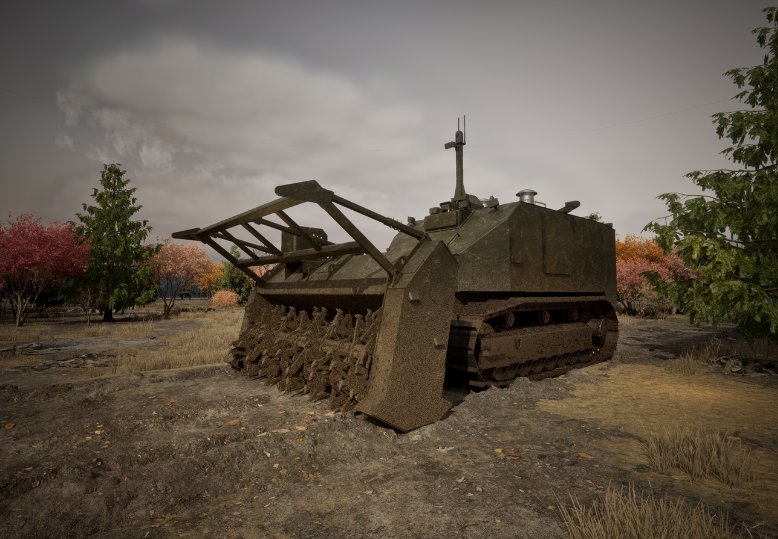
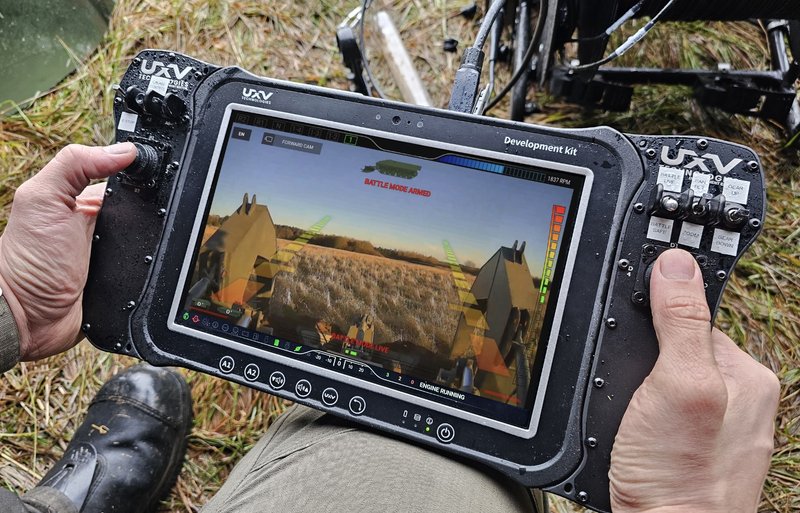
A fully uncrewed system, capable of remote-controlled operations up to three kilometres away, the MW370 NG is controlled through a mesh-capable interface, offering real-time video feeds and comprehensive diagnostics. The system is designed for large area clearance at scale, equipped to process 30,000m2 a day (up to 4,500m2 per hour) with 12 hours endurance.
The new variant builds on the proven heritage of its predecessor, which has been deployed worldwide. As well as Ukraine, Pearson Engineering’s MineWolf platforms have supported operations in the Middle East, for customers including the Kingdom of Saudi Arabia, Iraq and the United Arab Emirates.
“The benefits are clear: uncrewed systems save lives and significantly improve the scope and efficiency of mine clearance operations,” said Bell. “And this is only the beginning – expect to see further innovation in uncrewed mine clearance in the years to come.”
Empowering decision-makers
Platforms such as MineWolf are just one illustration of the growing importance of autonomy in combating the landmine threat. Pearson Engineering will also display its Threat-Sense advanced detection and classification system at Eurosatory.
This uses integrated sensors and data processing to detect and identify surface-laid landmine threats in real time. The technology is based on the passive Threat-Sense Processing Unit and analyses video streams from cameras mounted on a ground vehicle or uncrewed aerial system (UAS) to detect and identify suspicious objects from its extensive library.
The technology delivers quick and accurate information to empower decision-makers, noted Bell.
“Data is a crucial resource on today’s battlespace, and mine clearance is no exception,” he said. “The AI-powered capabilities of tools like Threat-Sense can help operators sort the signal from the noise.”
Evolving technology, new partnerships
Pearson Engineering is working across domains to deepen the reach of its autonomous and robotic technologies, including via partnerships with other specialist providers in industry and government.
For example, in October 2025, the company announced a collaboration with Skydio, a US-based manufacturer of autonomous drones, which will integrate Threat-Sense with the latter’s X10D secure UAS. This integration will enable the aircraft to scout ahead of ground forces, identifying and mapping explosive surface-laid threats in real time.
Similarly, the company has worked with the UK’s Defence Science and Technology Laboratory (DSTL) to deliver the WEEVIL system, a Warrior AFV-based platform that incorporates a specially adapted Full Width Mine Plough and Pearson Engineering’s BEACON remote-control system, which demonstrates the ability to turn legacy crewed vehicles into uncrewed assets.
Pearson Engineering is also working alongside Milrem Robotics, Overwatch Aerospace and MSI-Defence Systems to develop a UK-specific version of the THeMIS combat uncrewed ground vehicle, another new extension of its investments in AI, robotics and advanced manufacturing.
“In today’s environment, mine detection and clearance technology must constantly evolve to integrate new platforms and keep pace with the threat,” said Bell. “We want to expand our capabilities and ensure our technology has the widest possible impact.”
Building connections
As these partnerships demonstrate, Pearson Engineering is keen to share expertise and knowledge with stakeholders across the mine clearance community. For example, members of its team attended the International Meeting of Mine Action National Directors and UN Advisers (NDMUN29) in Geneva in April, which gathered over 800 experts from industry, governments, NGOs and international bodies.
There was notable interest in robotics and automation, with many participants keen to see demonstrations of the MW370 NG and Threat-Sense first-hand, as well as expressing interest in visiting Pearson Engineering’s facilities at Armstrong Works in North-East England.
This underscores the growing demand among armed forces and governments for systems that can enhance the efficiency and scale of mine clearance while protecting military personnel and civilians. Bell expects these technological innovations to generate significant interest, with Pearson Engineering’s representatives keen to connect with experts across industry, government and beyond at Eurosatory.
“We’re excited to discuss the power of robotics and automation in empowering mine clearance operations. The show is a great opportunity to demonstrate how these advances are shaping operations and saving lives today,” he concluded.


More from Studio
-
![Integrated approach: transforming vehicle communications for a new era of warfare]()
Integrated approach: transforming vehicle communications for a new era of warfare
In the modern battlespace, military intercom systems can no longer operate in isolation. They must instead be integrated with the wider tactical network, gaining operational advantages through secure communications with dismounted soliders and other assets across domains.
-
![Active protection systems: from optional upgrade to operational requirement]()
Active protection systems: from optional upgrade to operational requirement
As battlefield threats multiply, active protection systems are becoming increasingly important for armoured vehicle survivability – but cost, integration challenges and evolving drone threats will determine how widely they can be deployed.
-
![How laser weapons could transform the economics of European air defence (Podcast)]()
How laser weapons could transform the economics of European air defence (Podcast)
Former UK Defence Secretary Lord John Hutton examines how drones, missiles, laser weapons and procurement pressures are reshaping European air defence.
-
![How Pearson Engineering combines tradition with innovation for the demining mission (Video)]()
How Pearson Engineering combines tradition with innovation for the demining mission (Video)
At Eurosatory 2026, Pearson Engineering's Group CEO Ian Bell talked about the company's role in delivering specialist armoured engineering, route-clearance and demining capabilities to military customers around the world.
-
![Ukraine experience forces rethink of counter-UAS doctrine]()
Ukraine experience forces rethink of counter-UAS doctrine
A panel session at Eurosatory 2026 brought together industry, academia and the French armed forces to assess how Ukraine’s battlefield reality is reshaping counter-UAS (CUAS) technology, air defence doctrine and Western procurement priorities.
-
![Networked advantage: keeping unmanned systems in the loop with battlefield radio technology]()
Networked advantage: keeping unmanned systems in the loop with battlefield radio technology
Unmanned systems are powerful intelligence, surveillance and reconnaissance (ISR) assets and communication tools, but are often isolated from wider networks, limiting their potential. Industry is now tackling this challenge, empowering UxVs to act as integrated nodes across domains.