Skyranger anti-aircraft turret to use Spexer sensors
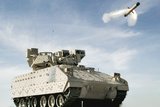
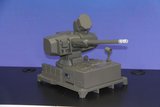
The Rheinmetall Skyranger 30 will be available with the Spexer 200M air defence radar, initially on German and Austrian models. (Photo: Rheinmetall)
The Spexer 200M sensor is the latest option to be offered on Rheinmetall’s anti-aircraft defence solution.


The Rheinmetall Skyranger 30 anti-aircraft turret will be fitted with an upgraded sensor array with the addition of Spexer air defence radars from Hensoldt.
The Skyranger 30 is a mobile ground-based air defence system which can be deployed against air targets at short and very short range as well as ground targets. The Skyranger will now be enhanced with Hensoldt’s Spexer air defence radars as part of its offering to clients.
Rheinmetall is paying Hensoldt almost €100 million (US$108 million) to add it to the Skyranger’s sensor options and the initial orders for the Spexer 2000M are for the German and Austrian armies’ systems, with Denmark having announced a corresponding procurement.
The Spexer 2000M 3D MKIII sensor specialises in high detection performance, even while targets are on the move. That ability will help make the Skyranger 30 more effective in its fight against short range threats
The Spexer is already a familiar sensor in Germany’s air defence as it is heavily used in the country’s counter-UAS field camp, qualified air defence, the Bundeswehr’s new very short and short-range air defence programme (NNbS) and the HoWiSM (high-energy laser for drone defence) programme.
Rheinmetall has done similar deals in recent months to maximise the operational competitiveness of the Skyranger 30. In June, 2024, it signed a Letter of Intent with MBDA to add the company’s small antidrone missile (SADM) to the Skyranger’s arsenal.
As with the Spexer radar, its armaments will be modular, and different versions of the tank will be made available to clients with particular defence needs, so while Skyrangers for the German market will come equipped with Stinger missiles, the multifunctional air defence tank can be fitted with Mistral missiles or the likes of MDBA’s SADM as required.
Related Equipment in Defence Insight

More from Land Warfare
-
![Front-line support: how UK industry is helping tackle Ukraine’s landmine challenges]()
Front-line support: how UK industry is helping tackle Ukraine’s landmine challenges
Pearson Engineering has provided equipment and engineering expertise to the Armed Forces of Ukraine since the beginning of the full-scale Russian invasion in 2022. The British company is now working to deepen engagement with the Ukrainian defence industry, expanding its support for the country’s population and laying the foundations for future technological innovation.
-
![AUSA 2026: companies adapt munitions and missiles for greater effect at lower costs]()
AUSA 2026: companies adapt munitions and missiles for greater effect at lower costs
Rather than developing entirely new weapons, defence companies are looking to build on existing weapons and systems to deliver greater capability, control costs and accelerate fielding.
-
![AUSA 2026: industry looks to make commercial platforms a military reality]()
AUSA 2026: industry looks to make commercial platforms a military reality
With a production rate of more than 10 million vehicles annually, the US commercial car and vehicle manufacturing base is second only to China. Defence companies are looking at how the vehicles, technology and manufacturing capability can support programmes.
-
![With changing patterns in Middle Eastern procurement, is Europe missing out?]()
With changing patterns in Middle Eastern procurement, is Europe missing out?
Traditional suppliers are struggling to meet the Middle East’s armoured vehicle modernisation needs, creating opportunities for South Korean manufacturers and regional defence industries.
-
![AUSA 2026: CUAS market expands as suppliers target new threats and operational requirements]()
AUSA 2026: CUAS market expands as suppliers target new threats and operational requirements
New developments from MARSS, MyDefence, Mountain Horse Solutions and Rafael suggest that future counter-drone protection will increasingly depend on combining advanced detection, rapid interception and integrated defensive networks.