Croatia to gain new HIMARS equipment in $390 million deal
HIMARS has become an increasingly popular defence asset for NATO members. (Photo: Lockheed Martin)
Croatia has become the latest NATO ally to request the purchase of HIMARS guided missile launchers.


The US State Department has agreed a Foreign Military Sale to the government of Croatia. The sale, at an estimated cost of US$390 million, covers M142 High Mobility Artillery Rocket Systems (HIMARS), related equipment and services.
Croatia has requested eight HIMARS, 24 M30A2 Guided Multiple Launch Rocket System (GMLRS) Alternative Warhead (AW) Pods with Insensitive Munitions Propulsion System (IMPS), 24 M31A2 GMLRS-Unitary High Explosive (HE) Pods with IMPS; two M1152 High Mobility Multipurpose Wheeled Vehicles (HMMWV) with Next Generation SECM (NG SECM); eight M1152 HMMWVs with Command and Control Communications Shelters; and 36 Defense Advanced GPS Receivers (DAGR).
Alongside these main ticket items, the Defense Security Cooperation Agency certified the sale of a range of non-MDE items, including: Low Cost Reduced Range Practice Rocket (LCRRPR) pods; AN/PRC-117G radios; AN/PRC-158 radios; AN/PRC-160 radios; Common Fire Control Systems (CFCS); International Field Artillery Tactical Data Systems (IFATDS); and the software, training and logistic support necessary to turn the new assets from items on a bill of sale into effective field resources.
Related Articles
Australia sees inexplicably steep price rise for additional HIMARS
US Army doubles HIMARS order to $1.9 billion
Norway cleared for HIMARS purchase worth $580 million
The proposed sale to Croatia has been justified in terms of supporting a NATO ally and would be in line with recent HIMARS sales to similar allies such as Poland, Estonia and Norway.
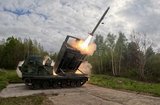
The HIMARS consists of a turntable launcher mounted on a 6x6 Family of Medium Tactical Vehicles (FMTV) cross-country truck chassis. Each HIMARS can carry six GMLRS missiles, each with a maximum range of around 43 miles (70km).
Naturally as the HIMARS’ manufacturer, the principal contractor on the Croatia sale would be Lockheed Martin out of Grand Prairie, Texas. More than 400 HIMARS units have been sold to date.
Related Programmes in Defence Insight

More from Land Warfare
-
![“Timelines are measured in seconds”: tackling the UAS threat with dispersed defences]()
“Timelines are measured in seconds”: tackling the UAS threat with dispersed defences
Small uncrewed aerial systems (UAS) have transformed the battlespace, posing a complex threat across all domains. Militaries now need counter-UAS (CUAS) capabilities that defeat the danger while meeting demands around readiness, manoeuvrability and adaptability, according to Mike Spina, Director, Global Sales and Business Development for Targeting and Sensor Systems (TSS) at L3Harris Technologies.
-
![“No single technology is enough”: why an integrated approach to uncrewed warfare is essential]()
“No single technology is enough”: why an integrated approach to uncrewed warfare is essential
In Conversation… Ahmet Akyol, CEO of ASELSAN, talks to Shephard’s Gerrard Cowan about how the rapid evolution of uncrewed aerial systems (UAS) is transforming the battlespace, with militaries focused on both deploying these platforms to maximum effect and developing the defensive systems needed to counter them.
-
![Lasers heat up for counter-drone option as DroneLight tackles the big question]()
Lasers heat up for counter-drone option as DroneLight tackles the big question
Using lasers to defeat drones promises to solve the dilemma of using expensive kinetic effects to kill platforms worth a few hundred dollars. While maintaining thermal output to provide the effects can be a technical hurdle, Israel’s Esh-Tech is one company working on a solution.
-
![How Pearson Engineering combines tradition with innovation for the demining mission (Video)]()
How Pearson Engineering combines tradition with innovation for the demining mission (Video)
At Eurosatory 2026, Pearson Engineering's Group CEO Ian Bell talked about the company's role in delivering specialist armoured engineering, route-clearance and demining capabilities to military customers around the world.