Australia sees inexplicably steep price rise for additional HIMARS
Australia has enquired about the cost of obtaining 22 additional HIMARS, and the price is astronomical. (Photo: Gordon Arthur)
Questions need to be asked at the steep inflation, in the order of a magnitude of 2.5, that the US is asking for HIMARS.


The US Defense Security Cooperation Agency (DSCA) notified a potential $987 million Foreign Military Sale to Australia for the M142 HIMARS rocket artillery system on 18 August.
What is astounding about this notification is the sharp increase in price compared to an earlier DSCA approval issued on 18 August 2022. At that time, 20 HIMARS and related munitions were expected to cost $385 million.
The Department of Defence stated: ‘The Albanese government is accelerating Australia’s long-range precision strike capability, and will more than double the number of HIMARS launchers being acquired for the Australian Defence Force. To implement a
Our news & analysis is now part of Defence Insight®
A Basic-level or higher Defence Insight subscription is now required to view this content.


More from Land Warfare
-
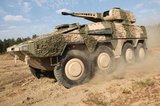
![Boxer lands another order as contracts and opportunities build momentum]()
Boxer lands another order as contracts and opportunities build momentum
As Germany prepares its €25 billion order under the Arminius framework – the biggest Boxer procurement to date – the platform could become an increasingly powerful contender in European competitions.
-
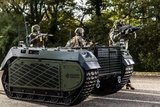
![Trans-European iMUGS2 uncrewed systems programme set for three-day exercise in 2028]()
Trans-European iMUGS2 uncrewed systems programme set for three-day exercise in 2028
The next stage of the Integrated Modular Unmanned Ground System (iMUGS) programme, dubbed iMUGS2, was launched in November 2025. Three major demonstrations are planned before the end of 2028.
-
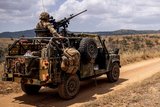
![British Army Land Rover replacement plan inches forward]()
British Army Land Rover replacement plan inches forward
The UK Ministry of Defence has proposed a selection date of May 2027 for the Land Rover replacement requirement, with deliveries expected through to 2036. Next month’s DVD exhibition will be a key shop window for bidders.
-
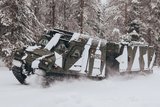
![Snow patrol and access all areas: the Arctic all-terrain vehicles market grows]()
Snow patrol and access all areas: the Arctic all-terrain vehicles market grows
The procurement and planned procurement of articulated tracked all-terrain vehicles is being driven by a need to replace older platforms and an acknowledgement of a capability gap for Arctic regions.