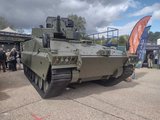
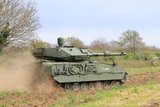
Do heavy IFV designs make sense on the modern battlefield?
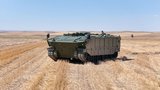
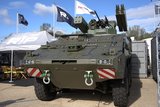
The Namer heavy IFV is deployed by the IDF in two versions, with this example sporting a remote weapon station armed with a 12.7mm MG plus another pintle-mounted gun, as well as Rafael’s Trophy APS. (Photo: Rafael)
Even with additional armour, many current-generation infantry fighting vehicles are highly vulnerable to enemy fire in the contemporary operating environment. Are heavier platforms based on tank designs for use in this role the answer?


Combat operations in Ukraine have shown that losses of infantry fighting vehicles (IFVs) and armoured personnel carriers (APCs) were around double those of main battle tanks (MBTs), as the latter are better protected and have a higher level of survivability.
The potential losses in personnel are even worse by comparison. Russian MBTs normally have a crew of three consisting of commander, gunner and driver. For IFVs such as the older BMP-1 and BMP-2, which have been deployed in significant numbers by both sides, the scope for higher casualties is significant.
The BMP-1 IFV has a crew of three (commander and
Our news & analysis is now part of Defence Insight®
A Basic-level or higher Defence Insight subscription is now required to view this content.

More from Land Warfare
-
![Air defence offerings multiply in anticipation of emerging requirements]()
Air defence offerings multiply in anticipation of emerging requirements
Air defence and counter-drone weapons continue to be developed, tested and demonstrated in anticipation of growing demand, with most solutions designed to be platform-agnostic and readily integrated onto suitable platforms.
-
![FNSS advances Indonesian Kaplan APC programme as local production expands]()
FNSS advances Indonesian Kaplan APC programme as local production expands
FNSS and PT Pindad are progressing the Indonesian tracked armoured personnel carrier programme as local production gets under way.
-
![Tulpar firing trials expand Hitfact Mk II platform options]()
Tulpar firing trials expand Hitfact Mk II platform options
Firing trials of the Tulpar and Leonardo Hitfact Mk II combination follow an integration programme covering mechanical, electrical, electronic and software interfaces.