UK DIP: Royal Navy bets on defence technology over bigger fleets
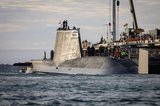
The Royal Navy is embracing technological advancements to modernise its operational capabilities and achieve cost savings. (Photo: Royal Navy)
The Royal Navy’s transition towards a hybrid fleet could prove to be less about building more hulls and more about delivering the autonomous technologies, AI and digital integration that will support future maritime operations.


One week after the publication of the UK government’s Defence Investment Plan (DIP), attention has begun to move beyond the headline commitments of £298 billion (US$404 billion) in defence spending and the promise of at least six new common combat vessels (CCVs) under the Type 45 Daring-class replacement programme.
Instead, the document’s biggest implication for industry may lie beneath the surface.
While major crewed platforms such as frigates, submarines and aircraft carriers will remain crucial to the Royal Navy’s (RN) future fleet, the DIP placed greater emphasis on the autonomous systems, artificial intelligence and digital networks expected to bind those platforms
Our news & analysis is now part of Defence Insight®
A Basic-level or higher Defence Insight subscription is now required to view this content.



More from Country-focused updates
-
![Companies downselected for British Army vehicle programme]()
Companies downselected for British Army vehicle programme
It is believed that three companies did not make the downselect but a dark horse in Spain’s Iturri is believed to have got through.
-
![US Air Force CCA programme to achieve multiple milestones in the coming months]()
US Air Force CCA programme to achieve multiple milestones in the coming months
The US Air Force is preparing to select mission-autonomy software, fire a missile from the FQ-42 Vengeance and test both CCA designs alongside crewed fighters at 2026 Emerald Flag.
-
![Will the US Navy F/A-XX and the USAF F-47 compete for production capacities?]()
Will the US Navy F/A-XX and the USAF F-47 compete for production capacities?
The two sixth-generation fighter programmes could battle for engineering talent and production lines before deliveries begin, testing Boeing’s industrial expansion plans.
-
![E-3 Sentry encryption equipment no longer meets US security requirements, says USAF]()
E-3 Sentry encryption equipment no longer meets US security requirements, says USAF
The US Air Force says the Sentry fleet’s DAR-400 encryptor can no longer keep pace with changing security requirements and warns that a failure could affect US operations and data security.
-
![Israeli Navy looks to expand as war reshapes future force requirements]()
Israeli Navy looks to expand as war reshapes future force requirements
Israel’s navy is preparing for a larger and more technically diverse role, but its ambitions could be impacted by supply chain restrictions, accelerating demand for domestic naval production as well as autonomous maritime capabilities.