Critical infrastructure protection fuels growth in maritime counter-drone market
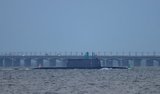
SeaEagle Maritime Systems is a component of Chess Dynamics’ maritime surveillance portfolio. (Photo: Chess Dynamics)
Operational lessons are pushing navies towards counter-uncrewed aerial systems at sea, creating a fast-emerging industrial opportunity for radar and effector makers.


Uncrewed aerial threats that have dominated land warfare since Russia’s full-scale invasion of Ukraine are increasingly appearing at sea, and naval forces and the companies that equip them are racing to catch up.
Interviews conducted by Shephard at Eurosatory 2026 in Paris, France with two counter-uncrewed aerial systems (CUAS) suppliers, Chess Dynamics and Robin Radar, pointed to a migration of drone threats from the ground to the maritime domain, driven by lessons from Ukraine’s Black Sea campaign and reinforced by attacks on shipping and offshore infrastructure elsewhere.
That shift is opening what both companies described as a substantial, if even more
Our news & analysis is now part of Defence Insight®
A Basic-level or higher Defence Insight subscription is now required to view this content.


More from Naval Warfare
-
![Industrial teams prepare roadmap for Indonesia aircraft carrier transformation]()
Industrial teams prepare roadmap for Indonesia aircraft carrier transformation
Fincantieri and PT PAL have agreed on a framework to modernise the former Giuseppe Garibaldi, with drones, communications and broader Italian–Indonesian industrial ties involved.
-
![Denmark’s air defence frigate requirement draws growing European competition]()
Denmark’s air defence frigate requirement draws growing European competition
With no formal competition under way, industrial partnerships, production capacity and air defence capability could all shape the programme as Denmark considers how to replace its three Iver Huitfeldt-class frigates.
-
![Five years on: where could opportunities emerge next for AUKUS Pillar II?]()
Five years on: where could opportunities emerge next for AUKUS Pillar II?
Payload commonality, combat systems and electronic warfare are emerging as likely priorities as the trilateral partnership balances building submarines with sharing industrial ecosystems.
-
![Singapore expands maritime presence with future-ready Sentinel OPV]()
Singapore expands maritime presence with future-ready Sentinel OPV
Singapore is building space for uncrewed systems and future technologies into its new Sentinel-class OPVs, reflecting a wider move towards adaptable vessels capable of maintaining persistent maritime presence.
-
![From the Baltic to the Gulf: where USV procurement is heading next]()
From the Baltic to the Gulf: where USV procurement is heading next
Saildrone’s new Copenhagen base is one sign of a larger shift, as navies globally turn to uncrewed vessels for surveillance and mine clearance.
-
![Israeli Navy looks to expand as war reshapes future force requirements]()
Israeli Navy looks to expand as war reshapes future force requirements
Israel’s navy is preparing for a larger and more technically diverse role, but its ambitions could be impacted by supply chain restrictions, accelerating demand for domestic naval production as well as autonomous maritime capabilities.