


British Army embraces SlingShot
Add-on kit turns UHF/VHF radio into a BLoS solution to support voice and data communications.


The Transport Aggregation Gateway provides a unified gateway enabling multiple transmission paths across satellite, cellular and line-of-sight communication networks. (Photo: L3Harris)
In the age of Great Power Competition, armed forces require secure and resilient communication pathways to ensure maximum levels in connectivity even when operating in the most contested of environments.
Seeking to satisfy these demand signals, industry is offering various aggregated communications solutions capable of integrating a variety of networks, ranging from SATCOM and Mobile Ad Hoc Network (MANET) communications to 4G and 5G networks.
Examples include the Transport Aggregation Gateway (TAG) solution, which L3Harris Technologies designed to ensure critical communications in denied and degraded C2 environments.
Speaking to Shephard, L3Harris product director Shane Sims explained how TAG relies
Our news & analysis is now part of Defence Insight®
A Basic-level or higher Defence Insight subscription is now required to view this content.

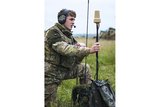
Add-on kit turns UHF/VHF radio into a BLoS solution to support voice and data communications.

The MOESS programme intends to deploy a sovereign Australian tactical electromagnetic sensor capability, installed on a constellation of CubeSats. DEWC is developing a sensor that can conduct radar electronic support in defence-relevant radio frequency bands used by assets such as ships and aircraft.

The US is progressing with its HBTSS project, having overcome an important obstacle.

Plans for Russia to build its own orbital station could enable geospatial intelligence-gathering missions and onboard military experiments away from international observers.

Europe ceded the initiative on reusable launcher technology in 2014 and only now is it trying to claw back the lost ground.

Commercial satellite constellations may find favour with the DoD for low Earth orbit solutions.

Connect with us on socials


