


British Army embraces SlingShot
Add-on kit turns UHF/VHF radio into a BLoS solution to support voice and data communications.


Concept design for the Hypersonic and Ballistic Tracking Space Sensor. (Photo: Northrop Grumman)
The US military has cleared an important technological hurdle in its project to develop a next-generation space-based sensor, by advancing plans for a new constellation to track long-range hypersonic and ballistic missiles from launch to impact and provide fire-control quality data to weapons on the ground to counter these threats.
The Missile Defense Agency (MDA) says it has addressed the highest threat risk to its plans for launching a Hypersonic and Ballistic Tracking Space Sensor (HBTSS) by 2023 — the ability for the IR system to distinguish dim targets from the ambient temperatures of the ground and sea when staring
Our news & analysis is now part of Defence Insight®
A Basic-level or higher Defence Insight subscription is now required to view this content.

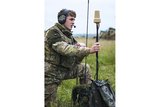
Add-on kit turns UHF/VHF radio into a BLoS solution to support voice and data communications.

The MOESS programme intends to deploy a sovereign Australian tactical electromagnetic sensor capability, installed on a constellation of CubeSats. DEWC is developing a sensor that can conduct radar electronic support in defence-relevant radio frequency bands used by assets such as ships and aircraft.

Plans for Russia to build its own orbital station could enable geospatial intelligence-gathering missions and onboard military experiments away from international observers.

Europe ceded the initiative on reusable launcher technology in 2014 and only now is it trying to claw back the lost ground.

Commercial satellite constellations may find favour with the DoD for low Earth orbit solutions.

In 2022, US Army Brigade Combat Teams should be equipped with a new tool for seamless and resilient communications in contested environments.

Connect with us on socials


