


World Defense Show 2026: Northrop Grumman to present improved C2 management system
The Northrop Grumman Integrated Battle Command System is in service with Poland and the US Army with another 20 countries believed to have expressed an interest.


Ukraine is obtaining enhanced satellite imaging capabilities. (Photo: ICEYE)
Funds originally raised by the Ukrainian public to buy Bayraktar TB2s have been used instead to acquire synthetic aperture radar (SAR) satellite imaging capabilities to aid resistance against the ongoing Russian invasion.
Under a contract with the Serhiy Prytula Charity Foundation, announced on 18 August, ICEYE will initially provide the Ukrainian government with SAR imaging from one of its in-orbit satellites.
The value of the deal was undisclosed but the Serhiy Prytula Charity Foundation stated that it is using $20 million originally crowdfunded in June 2022 to acquire three Bayraktar TB2 UAVs.
Manufacturer Baykar later decided to provide the UAVs free of charge.
The SAR satellite will be operated by ICEYE, which will also provide the Ukrainian military with access to its 21-satellite constellation.
This will give Ukraine ‘radar satellite imagery on critical locations with a high revisit frequency’, ICEYE noted in a statement.

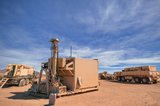
The Northrop Grumman Integrated Battle Command System is in service with Poland and the US Army with another 20 countries believed to have expressed an interest.
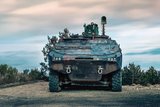
The Thales DigitalCrew package, first unveiled at last year’s Defence IQ International Armoured Vehicles conference, is designed to merge imaging and apply a layer of decision-making and observation algorithms to support crew and other personnel.

Nomad can provide militaries with real-time intelligence, saving critical time on the battlefield.
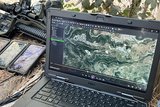
Taurus operates alongside the Israel Defense Forces’ Orion system which supports mission management across tens of thousands of manoeuvring forces, from squad leaders to battalion commanders.
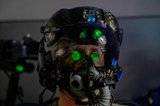
The plan for the new displays follows fresh investment in Kopin’s European facilities by Theon and an order for head-up displays in fielded aircraft, with funding from the US Department of Defense.
Persistent Systems received its largest ever single order for its MPU5 devices and other systems earlier this month and has already delivered the 50 units to the US Army’s 4th Infantry Division.

Connect with us on socials


