UK researchers seek resilience for UAVs in GNSS-denied environments
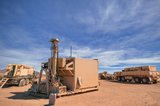
The research team will test concepts with an aircraft from Windracers. (Photo: Windracers)
UK project seeks to improve control of drone swarms in contested environments.


A project involving industry and academia in the UK aims to prove how a single remote operator and local safety pilot can handle multiple UAVs and maintain continuous communication in GNSS-denied environments.
The Innovate UK-funded Phase 3 of the Future Flights Challenge includes Helix Geospace, Windracers, Distributed Avionics plus Bristol and Sheffield universities.
Researchers will focus on demonstrating how large UAVs with a maximum take-off weight of 450kg can be used to solve environmental protection concerns in GNSS-denied environments, functioning in swarms and utilising a combination of digital twinning, computer vision, and real-world flight testing in the Antarctic.
Helix Geospace stated on 25 August that it is providing its Dielectrix antenna system ‘to detect jamming and spoofing events, pinpoint their precise source and then eliminate their impact, maintaining the accuracy and resilience of GNSS PNT [positioning, navigation and timing] in GNSS-denied environments’.
Oliver Leister, chief technology officer at Helix Geospace, said: ‘Due to the weak and vulnerable nature of the GNSS signal, the signal is extremely susceptible to jamming and spoofing; our solution does not rely on additional sensors to aid position data, which could be compromised in various environments.’

More from Digital Battlespace
-
![Artificial intelligence: the hope, the hype and the real-world reality]()
Artificial intelligence: the hope, the hype and the real-world reality
Artificial intelligence has supported C2 systems and decision-making for more than two decades. It has gradually built up a head of steam in the 2020s, but what is it achieving today and what role could it play in the future?
-
![SOF Week 2026: How SOF Teams Are Powering Radios, Drones and Battlefield Networks (video)]()
SOF Week 2026: How SOF Teams Are Powering Radios, Drones and Battlefield Networks (video)
At SOF Week 2026, Sean O’Neill, Senior Business Development Manager with Iris Technology, discusses the growing importance of tactical power management systems for modern military operations.
-
![SOF Week 2026: How SOF Operators Are Driving the Future of Battlefield Communications (video)]()
SOF Week 2026: How SOF Operators Are Driving the Future of Battlefield Communications (video)
At SOF Week 2026, Austin Farnham, President of Octane Wireless, discusses how direct feedback from special operations forces is helping shape the next generation of battlefield communications technology.
-
![World Defense Show 2026: Northrop Grumman to present improved C2 management system]()
World Defense Show 2026: Northrop Grumman to present improved C2 management system
The Northrop Grumman Integrated Battle Command System is in service with Poland and the US Army with another 20 countries believed to have expressed an interest.
-
![Thales looks to boost DigitalCrew system through AI and human-machine teaming trials]()
Thales looks to boost DigitalCrew system through AI and human-machine teaming trials
The Thales DigitalCrew package, first unveiled at last year’s Defence IQ International Armoured Vehicles conference, is designed to merge imaging and apply a layer of decision-making and observation algorithms to support crew and other personnel.
-
![Babcock nears first customer for Nomad AI translation tool]()
Babcock nears first customer for Nomad AI translation tool
Nomad can provide militaries with real-time intelligence, saving critical time on the battlefield.