Babcock nears first customer for Nomad AI translation tool
Nomad can provide militaries with real-time intelligence, saving critical time on the battlefield.
Part of the Army’s initiative to rapidly field signals intelligence capabilities that address the challenge of intelligence, reconnaissance and surveillance (ISR) recently rolled off the production line in Scottsdale.
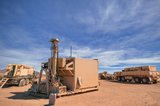
A team led by General Dynamics C4 Systems delivered the first Prophet Enhanced tactical signals intelligence system before a group of military customers including Brig. Gen. Thomas Cole, program executive officer for Intelligence, Electronic Warfare and Sensors for the US Army.
The Prophet Enhanced system will enable tactical commanders to better “see,” “hear” and “respond” to ISR information throughout the networked battlespace. The first system, integrated into a Panther rapid-deployment command-and-control vehicle will next undergo system testing and evaluation in Scottsdale. The Army awarded the Prophet Enhanced contract to a team led by General Dynamics in February 2009.
“Once fielded, this system will have a direct and immediate impact on protecting warfighters throughout the battlespace,” said Mark Showah, director of Integrated Systems for General Dynamics C4 Systems.
Nomad can provide militaries with real-time intelligence, saving critical time on the battlefield.
Taurus operates alongside the Israel Defense Forces’ Orion system which supports mission management across tens of thousands of manoeuvring forces, from squad leaders to battalion commanders.
The plan for the new displays follows fresh investment in Kopin’s European facilities by Theon and an order for head-up displays in fielded aircraft, with funding from the US Department of Defense.
Persistent Systems received its largest ever single order for its MPU5 devices and other systems earlier this month and has already delivered the 50 units to the US Army’s 4th Infantry Division.
Turkey has joined the family of countries attempting to establish a multilayered air defence system with government approval in August 2024 for the effort landed by Aselsan. Dubbed Steel Dome, the programme joins Israel’s Iron Dome, the US Golden Dome, India’s Mission Sudarshan Chakra and South Korea’s low-altitude missile defence system.
MARSS’ NiDAR system has been deployed using sensors from static platforms to provide detection and protection for static sights, such as critical infrastructure, ports and military bases.