US seeks 32% boost for missile defence budget with $23 billion earmarked for interceptors
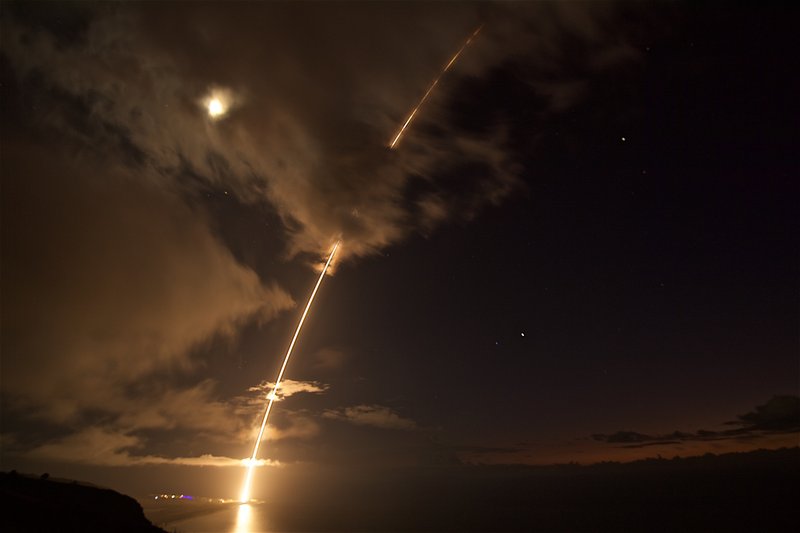
The SM-3 Block IIA missile is the product of a co-development agreement between the US and Japan.(Photo: US Navy)
The Pentagon’s proposed budget for the next fiscal year includes an impressive increase in the procurement of interceptors, with the number of the US Army’s PAC-3 MSE rounds expanding by 683%, the US Navy’s Standard Missile by 365% and the MDA’s SM-3 IIA by more than 1,000%.


The US administration has requested US$52.8 billion to cover missile defence-related acquisitions and research and development programmes in FY2027. This represents a 32% increase compared to the amount Washington requested for the current fiscal year, at around $40 billion.
The boost will enable the Pentagon to advance the Golden Dome for America initiative and considerably expand the procurement of counter-missile rounds such as Patriot Advanced Capability-3 Missile Segment Enhancement (PAC-3 MSE) and Standard Missiles (SM).
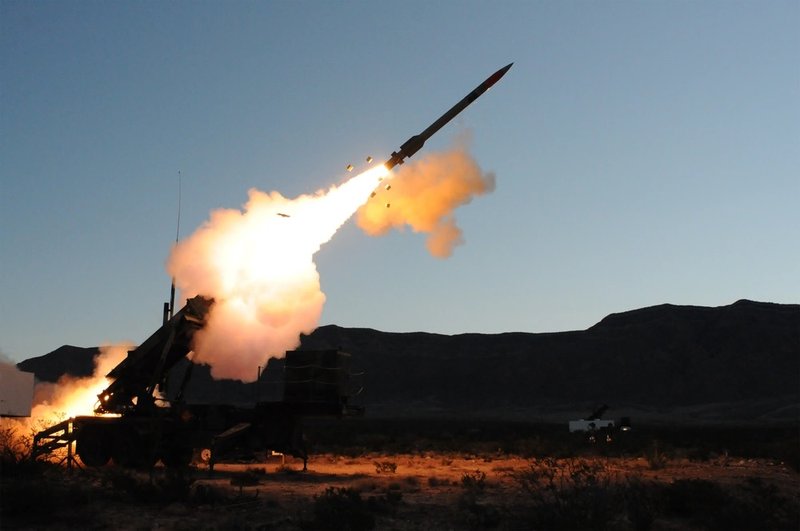
For the US Army, the purchase of MSE rounds grew from $1.7 billion for 357 units in FY2026 to $12 billion for 2,798 missiles. This represents a 683% raise in terms of the number of interceptors and a 590% boost in investment.
Related Articles
US plans to raise defence production by 300% but multiple uncertainties remain
RTX Raytheon enhances SM-3 and SM-6 production capacity
The US Navy (USN), in turn, had requested $1.5 billion to procure 166 Standard Missiles (SM-6 and SM-2) in the current fiscal year, but this figure expanded to $4.3 billion for 540 units in FY2027 – a 185% increase in funds and a 365% rise in the number of rounds.
Meanwhile, the Missile Defence Agency’s (MDA) budget for missile defence rounds increased by 128% from $2.5 billion to $5.7 billion. This covered additional acquisitions of SM-3 IIA, whose figures jumped from $510 million for 12 units to $4.2 billion for 136 rounds. In this case, the number of missiles acquired was more than 1,000% higher, while the funds raised by 727%.
Tackling growing and changing threats
In total, the US Department of Defense (DoD) proposed a $23 billion investment in interceptors. The figure reflects the concern about matching the advancements of US adversaries.
“Our rivals are expanding, diversifying and increasing the sophistication of their arsenals of missile and aerial weapons,” Marc J Berkowitz, assistant secretary of war for space policy at the DoD, remarked during a recent hearing at the House Committee on Armed Services.
Berkowitz noted that “the risk is compounded by the prospect of simultaneous conflicts, where adversaries could act in coordination or opportunistically across multiple theatres”. He added: “The pace and scale of the threat is unprecedented.”
Meanwhile, Gen Gregory M Guillot, commander of the Northern Command (NORTHCOM) and the North American Aerospace Defence Command (NORAD), warned that threats continue to expand with potential adversaries believing “that fielding advanced long-range weapons will deter a US strategic attack and constrain our options in a crisis”.
The concern is even more critical when it comes to China, as the country has been rapidly improving its missile capabilities and expanding its reserves.
“Beijing’s modernisation programme aims to field a variety of novel weapons, including intercontinental ballistic missiles equipped with hypersonic glide vehicles and missiles designed to fly fractional orbital bombardment system trajectories that challenge missile defences and complicate actionable warning,” Guillot alerted.
The expansion of investment in missile defence and interceptors also results from the US’s need to accelerate the replenishment of its own and its allies’ stockpiles after spending a considerable number of interceptors in the operations Midnight Hammer and Epic Fury.
The US Central Command (CENTCOM) estimated early this month that Iran has conducted more than 2,500 aerial attacks during or in retaliation for those US offensives.
According to the Washington-based think tank CSIS, the first 23 days of the Epic Fury engagements consumed around 600 interceptors from the US and partners’ reserves.
The Democratic Representative from Massachusetts, Seth Moulton, claimed that Washington’s missile defence rounds are “an incredibly finite resource”, and the attacks against Tehran consumed “a year’s worth of interceptor production”.
“Missile defence will not absolve the poor strategic choices and our adversaries from finding other ways to inflict harm,” Moulton said. “Every conversation about missile defence, both policy and programmes, must acknowledge these limitations.”
Capability gaps in the US missile defence architecture
Another of Washington’s concerns in this domain is addressing current and future potential capability gaps in the US air defence architecture.
Gen Michael Guetlein, direct report programme manager for Golden Dome for America, stated that for decades, the US relied on “a limited missile defence system”, designed to counter threats from rogue states like North Korea and Iran.
This is certainly the case for NORAD’s inventory, which is responsible for providing aerospace surveillance, identification, control and warning for the US and Canada.
The largest part of its in-service assets has been in operation for more than four decades and is not capable of detecting threats launched from newer submarines and uncrewed, airborne and land-based platforms. Its North Warning System (NWS), for example, entered service in the 1980s. Its capabilities are focused on cruise missiles and cannot counter hypersonics.
The array of 49 long-range AN/FPS-117 and short-range AN/FPS-124 surveillance radars currently provides aerospace surveillance and early warning to Alaska, Canada and the continental US.
The Point Barrow Long Range Radar Site (LRRS) at Utqiagvik, Alaska, also operates ageing assets. The site’s infrastructure and equipment date from the 1950s, when the most critical concerns were countering Soviet bombers and the early cruise missiles.
Guillot stressed that “current adversary capabilities are far more advanced than the slow-flying bombers and gravity bombs of the 1960s”.
Guetlein, meanwhile, said that the US “can no longer afford to rely on legacy defence systems, designed for a different strategic environment”.
“Today, our nation faces a new generation of missile threats that are faster, more manoeuvrable and more numerous than ever before. The threats to the homeland are not theoretical. They are real,” Guetlein added.
Secrecy and doubts remain around the Golden Dome
The Pentagon plans to plug the capability gaps across the US missile defence architecture through the Golden Dome for America initiative.
Planned to be a system-of-systems “shield” to protect the homeland, it involves the acquisition of affordable, scalable, next-generation technologies and assets as well as their integration with the current Pentagon’s systems.
According to Guetlein, this effort “is a direct response to a shift in the global security environment”. He explained: “We actually need a layered, multi-domain, distributed architecture to make sure we do not have any exploitable holes.”
The initiative reached its first anniversary in January and has already consumed $23 billion. For FY2027, the Pentagon intends to allocate another $17.5 billion to the effort.
Despite the impressive figures, multiple questions around the programme remain unanswered, including uncertainty around the capabilities that will be or were acquired for the Golden Dome.
“Unfortunately, the administration has chosen to classify nearly everything when it comes to the architecture and cost of the system,” Moulton pointed out.
The total estimated investment of the initiative also remains unclear. US President Donald Trump claimed, when the effort was launched in 2025, that it would require $175 billion to be operational in three years, by 2028. Guetlien, in turn, said in the session at the House Committee on Armed Services that the total cost of the Golden Dome through its complete handover in 2035 would be $185 billion. The additional $10 billion would cover the acquisition of space assets that were not originally part of its architecture.
“We are going to deliver an operational capability by the summer of 2028 that will be able to protect the homeland against a variety of threats,” Guetlien noted.
The Congressional Budget Office, however, has estimated that over the next two decades, the effort would surpass $500 billion in cost. Meanwhile, the American Enterprise Institute foresees that it could reach $3 trillion over 20 years.
Related Equipment in Defence Insight



More from Defence Notes
-
![Patria OPTIME and ILIAS: Orchestrating operational readiness across every domain]()
Patria OPTIME and ILIAS: Orchestrating operational readiness across every domain
Patria OPTIME is a sustainment concept that integrates MRO and lifecycle services into one solution, powered by the ILIAS digital defence platform
-
![US military seeks common controllers for drones and robotic systems]()
US military seeks common controllers for drones and robotic systems
US Air Force, Army, Marine Corps and Special Operations Command initiatives signal demand for interoperable uncrewed systems control, creating opportunities for suppliers of hardware, software and integration services.
-
![“Start planning much earlier”: delivering defence support in an era of disruption]()
“Start planning much earlier”: delivering defence support in an era of disruption
In Conversation… The geopolitical landscape is increasingly uncertain, with the UK and its allies confronting the most unpredictable international environment for decades. To adapt, defence readiness must begin long before assets reach the front line, forging a resilient support enterprise that can thrive in a time of ongoing disruption, argue the partners of Team ORION.
-
![“Communicating at mission speed”: why data security is essential for operational success]()
“Communicating at mission speed”: why data security is essential for operational success
In conversation… Everfox’s Chairman and Chief Executive Officer Dave Wajsgras and Managing Director, International, Colin McKinty discuss the critical importance of information security in defence, minimising insider risk and the company’s international growth strategy with Shephard’s Andrew White.
-
![“Engage with the operational problem”: how software innovation can boost UK defence]()
“Engage with the operational problem”: how software innovation can boost UK defence
In Conversation… Shephard’s Andrew White talks to Zafer Şen, CEO and co-founder of OBSS, about the future of command-and-control software in the age of artificial intelligence, and his company’s ambitions in the UK defence market.
-
![“Capital follows confidence” as defence courts private money]()
“Capital follows confidence” as defence courts private money
Outside investment and the direction in which venture money flows may reveal what defence will buy years before formal programmes begin.