UK urged to prioritise sea, air and space over heavy armour
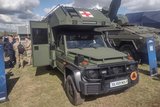
The Council on Geostrategy report argues the UK should expand its attack submarine fleet and deepen AUKUS cooperation to strengthen maritime power. (Photo: Crown Copyright)
A report from the Council on Geostrategy argues the UK should move away from a traditional balanced force and shift investment to naval, air and space capabilities, backed by a larger fleet of attack submarines and deeper AUKUS integration.


The UK should step back from pursuing a full-spectrum “balanced force” and instead concentrate defence investment in the maritime, air, space and nuclear domains, according to a report authored by Sam Goodman and James Rogers.
Asymmetric statecraft: Strengthening British power in a more geopolitical era argued that Germany and Poland’s continued land rearmament meant Britain had little to gain from rebuilding heavy armoured divisions.
Reinvesting in such capabilities would merely duplicate allied capacity, the authors said, adding that the UK’s advantage instead lay in a focused force able to dominate the sea, air, space and nuclear domains.
Naval and undersea
Our news & analysis is now part of Defence Insight®
A Basic-level or higher Defence Insight subscription is now required to view this content.


More from Country-focused updates
-
![British Army's open plan draws diverse offerings for Land Rover replacement]()
British Army's open plan draws diverse offerings for Land Rover replacement
The UK Ministry of Defence has avoided being prescriptive in its search to replace the British Army’s Land Rover, meaning vehicle types being offered range from Land Rover Defender Wolf II and Humvee to the hybrid series Fering Pioneer. What does this mean for the procurement process?
-
![V-22 Osprey safety upgrade moves towards wider fleet installation under $35.5 million deal]()
V-22 Osprey safety upgrade moves towards wider fleet installation under $35.5 million deal
Bell Boeing will supply 73 additional ODSSHI kits as NAVAIR prepares to introduce predictive drive-system monitoring across US and Japanese V-22 fleets.
-
![AFA 2026: USAF examines uncrewed cargo aircraft for contested logistics]()
AFA 2026: USAF examines uncrewed cargo aircraft for contested logistics
The US Air Force is evaluating demonstrators for uncrewed cargo missions as it considers logistics requirements across the Pacific and other contested environments.
-
![DVD 2026: British Army’s Ajax back in the hands of users as part of a gradual return]()
DVD 2026: British Army’s Ajax back in the hands of users as part of a gradual return
The introduction of Ajax vehicles into British Army service was stopped after operator health issues were reported during an exercise, but manufacturer General Dynamics Land Systems UK believes work over the past 10 months has dealt with the problems.