Budgetary uncertainty threatens Argentinian modernisation plans
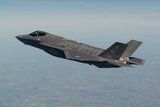
Argentina lost its supersonic capacity in 2015 after retiring its fleet of Mirage jets. (Photo: Argentinian MoD)
The new Argentina government has reduced the defence budget request for 2024 and enabled the use of FONDEF for expenses not related to equipment improvement.


The new Argentinian administration has been frustrating the armed forces’ plans to improve its inventory, as a number of measures taken under President Javier Milei’s leadership have impacted current and future procurement, as well as upgrade programmes.
Earlier this month, the Argentinian government announced the Administrative Decision 5/2024 which reduced the defence budget requested for the current fiscal year. The $2.9 billion funding proposed by the previous administration was lowered to $2.2 billion, with a total fall of approximately $757 million in funding.
Additionally, the document stated that the resources of the National Defence Fund (FONDEF in Spanish) can now be used to cover any
Our news & analysis is now part of Defence Insight®
A Basic-level or higher Defence Insight subscription is now required to view this content.


More from Defence Notes
-
![“Engage with the operational problem”: how software innovation can boost UK defence]()
“Engage with the operational problem”: how software innovation can boost UK defence
In Conversation… Shephard’s Andrew White talks to Zafer Şen, CEO and co-founder of OBSS, about the future of command-and-control software in the age of artificial intelligence, and his company’s ambitions in the UK defence market.
-
![“Capital follows confidence” as defence courts private money]()
“Capital follows confidence” as defence courts private money
Outside investment and the direction in which venture money flows may reveal what defence will buy years before formal programmes begin.
-
![Canada’s new military drone marketplace targets rapid acquisition pipeline]()
Canada’s new military drone marketplace targets rapid acquisition pipeline
The Department of National Defence expects initial contracts to deliver thousands of uncrewed systems, but has yet to establish the quantities, capability mix or deadline behind Ottawa’s promised tenfold expansion.
-
![Ukraine turns legacy Kongsberg land turrets into semi-autonomous USV weapons]()
Ukraine turns legacy Kongsberg land turrets into semi-autonomous USV weapons
The company told Shephard that Ukraine is operating modified Protector weapon stations originally supplied for armoured vehicles, with human operators authorising engagements from hundreds of kilometres away.
-
![UK urged to prioritise sea, air and space over heavy armour]()
UK urged to prioritise sea, air and space over heavy armour
A report from the Council on Geostrategy argues the UK should move away from a traditional balanced force and shift investment to naval, air and space capabilities, backed by a larger fleet of attack submarines and deeper AUKUS integration.
-
![Thales: deployment speed to determine winners in ‘production versus production’ era]()
Thales: deployment speed to determine winners in ‘production versus production’ era
At its technology summit in London, attended by Shephard, Thales UK examined the importance of speed to delivery, the growing focus on cross-domain capabilities and how procurement reform could be crucial for future battlefield advantage.