


UK eyes lightweight satellite communications for UAVs
The UK is seeking to extend the operational reach of uncrewed aerial vehicles, reflecting growing demand for compact, energy-efficient technology to support beyond-line-of-sight operations.


A Falcon 9 rocket launches satellites from Cape Canaveral Space Force Station. (Photo: US Space Force)
Aware of the current and future relevance of space, the US has been placing further emphasis on the development and acquisition of capabilities to be operated in the domain and to enable Joint Force deployments.
On 9 April, during a testimony before the US Senate Committee on Appropriations, Gen. B. Chance Saltzman, chief of space operations, claimed that “space has never been more critical to the security of our nation”.
“The success or failure of the Joint Force depends heavily upon the capabilities we present,” Saltzman stated. “It is our responsibility to contest, to control the domain to defend US space
Our news & analysis is now part of Defence Insight®
A Basic-level or higher Defence Insight subscription is now required to view this content.

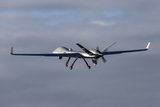
The UK is seeking to extend the operational reach of uncrewed aerial vehicles, reflecting growing demand for compact, energy-efficient technology to support beyond-line-of-sight operations.
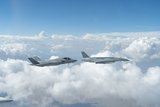
Northrop Grumman, Airbus and Anduril are positioning their uncrewed aerial vehicles for future collaborative combat aircraft contracts in a market that is forecast to exceed $36 billion.
Senior military leaders have highlighted the need for interoperable systems, common data standards and closer cooperation between India's armed services.
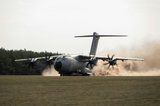
Airbus is developing new capabilities for its A400M transport aircraft as European countries consider future airlift requirements and the UK plans to deploy the aircraft to Saudi Arabia.
As the Pentagon accelerates procurement of low-cost, lethal UAVs through its Drone Dominance Program, emerging suppliers will need to demonstrate manufacturing capacity, supply chain resilience and reliability.
The service is updating several parts of its aviation fleet including fixed-wing and rotary-wing aircraft and procuring uncrewed aircraft to boost its maritime surveillance.

Connect with us on socials


