Insight: What future remains for the E-7 Wedgetail aircraft?
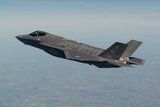
The RAAF E-7 Wedgetail taking flight. (Photo: USAF)
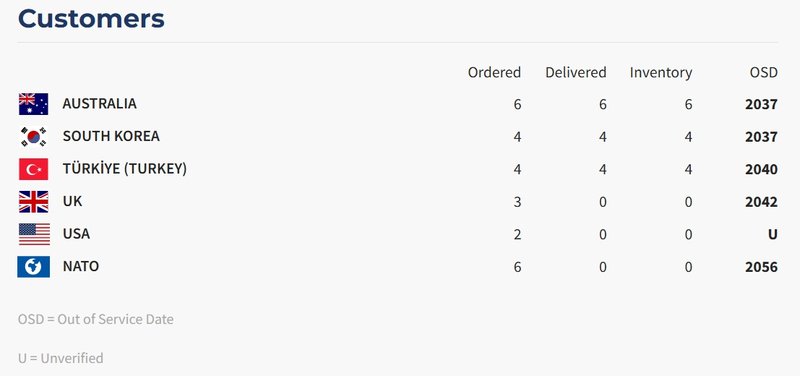
The Boeing 737 AEW&C is based on Boeing’s 737-700 commercial aeroplane. It is used for airspace surveillance and battle management. As of 2025, three countries are currently operating the aircraft: Australia (E-7 Wedgetail), South Korea (Peace Eye), and Turkey (Peace Eagle).
The UK, the US and NATO have also ordered the platform – although all three have experienced delays or possible reassessments (namely by the US Air Force) regarding the aircraft’s procurement and delivery plans.
Additional Information
Radar and mission systems
The platform incorporates the Northrop Grumman Multi-Role Electronically Scanned Array (MESA) radar, providing customers with 360-degree coverage and allowing the aircraft to be used for surveillance purposes and as an airborne command post.
Customers of the E-7 have the option to include HF, VHF/UHF, UHF and Link 11/16 communication systems with variable encryption capabilities.
The 737 AEW&C can have a mission crew of six to ten and a flight crew of two.
Who has ordered the E-7?
Australia
In 2000, Boeing Integrated Defence Systems was awarded a contract to supply AEW&C to the RAAF. The programme and the purchased aircraft were called Wedgetail. Six aircraft were delivered, with the last entering service in 2011.
In September 2018, Boeing signed a new agreement that allows for upgrades and sustainment for the life of the RAAF’s fleet of six E-7A Wedgetail aircraft into 2035. The agreement consolidates the existing Wedgetail In-Service Support and Project AIR 5077 Phase 5A contracts. Lifecycle upgrades and sustainment for the E-7A Wedgetail are valued at more than A$1.5 billion ($1 billion).
The Australian government awarded Boeing Defence Australia a $569 million modernisation contract to enhance and maintain the RAAFs aircraft.
In April 2025, the RAAF revealed one of the nation’s E-7 Wedgetail aircraft operated by the No. 2 Squadron in Williamtown is equipped with a Starlink satellite communication system.
NATO
In December 2023, NATO announced it had selected the E-7A Wedgetail as the successful platform for its Alliance Future Surveillance and Control programme, replacing the E-3 Aircraft from 2031 onwards.
However, in August 2025, according reports via Euractiv, the NSPA’s (NATO Support and Procurement Agency) plan to procure the E-7 aircraft was being reassessed with a final decision to be delivered in September in the wake of similar USAF uncertainty.
South Korea
In 2006, South Korea placed an order for four aircraft, with the last delivered in October 2012, while in 2014, Qatar announced it would acquire three of the type. Italy and the UAE are considered potential future operators. With a cruising altitude of 33,000ft, the Wedgetail can maintain surveillance over a surface area of 400,000km² at any given time.
Korea Aerospace Industries (KAI) signed a KRW18 billion (US$16.2 million) contract with Boeing to upgrade the four aircraft on 28 July 2021. This product improvement programme (PIP) led by Boeing will enhance the fleet’s identification of friend-or-foe and Link 16 data link systems.
The E-7 aircraft was one of three aircraft submitted for the South Korean AEW&C II competition, which sought to acquire four more aircraft by 2028. Despite reports Boeing had dropped out of the bid, Shephard learned that it still remained in the competition as of July 2025.
Türkiye (Turkey)
Türkiye purchased a similar Boeing 737-based system and the first of the type entered service in February 2014.
UK
On 22 March 2019, the UK MoD announced that it had signed a $1.98 billion contract to purchase five E-7 AEW&C aircraft. However, the number of E-7s reduced to three units with the UK Defence Command paper, Defence in a competitive age, published in March 2021.
During a meeting on 28 April 2025 held by the Public Accounts Committee regarding The Future of the Equipment Plan, the CEO of Defence Equipment and Support (DE&S) revealed the UK’s contracted E-7 Wedgetails continue to be delayed, citing “technical and delivery issues within Boeing”. The first aircraft is scheduled for delivery by the end of 2025 with IOC anticipated for 2026.
In the UK’s Strategic Defence Review 2025, the MoD recommended that the UK explore procuring additional E-7 AEW&C aircraft where funding allows including the option of sharing costs with NATO allies.
US
In August 2024, the USAF awarded Boeing a $2.6 billion contract for two rapid-prototype E-7A AEW&C aircraft. Despite no aircraft being delivered yet, the US released a Request for Information (RfI) in April 2025 for technology upgrades to the platform including a possible replacement for the Northrop Grumman (MESA) radar. Other potential upgrades include a next-generation tactical data link (TDL) and advanced infrared sensors.
According to the FY2026 national defence budget proposal, the US is set to cancel its E-7 Wedgetail order due to “significant delays” and increasing costs from $58 million to $724 million.
What is the potential unit cost?
On 6 May 2020, the UK Minister for Defence Procurement Jeremy Quin issued a written statement to reply to a parliamentary question on the procurement value of the UK Wedgetail programme.
He stated: “The figure of £1.51 billion ($2.02 billion) relates to the value of the aircraft procurement contract, whereas the figure of £2.16 billion ($2.89 billion) refers to the approved project costs [including] infrastructure and training and on future support/sustainment.”
At the time of the announcement, the UK government was planning to purchase five aircraft. Therefore, the average procurement cost of an E-7A could be seen as around $392 million.
This article was created using data and analysis from Shephard’s Defence Insight market intelligence tool. For more information or to request a demo, visit our information page here.
Shephard’s DSEI 2025 coverage is sponsored by:

Related Equipment in Defence Insight
More from DSEI 2025
-
Could the Ajax IFV solve the UK’s Warrior capability gap?
With the UK facing an imminent capability gap after the retirement of its Warrior infantry fighting vehicles (IFVs), the Ajax IFV appears to be in a prime position to fill that gap.
-
DSEI 2025: Polaris displays new all-terrain vehicle with Alakran mortar system
The Polaris Government and Defense’s Military RZR (MRZR) Alpha 1KW was displayed at the Modern Day Marine exposition in the US earlier this year and with the Alakran mobile mortar weapon system at DSEI. The company outlined recent firing trials with the Alakran mobile mortar weapon system (MMWS) which was weeks after the company announced a major NATO deal.
-
DSEI 2025: Thales creating new remote weapon station and Storm 2 counter-drone jammer
Thales launched Storm-H in 2012 as an EW system equipping individual dismounted troops, and a decade later revealed details to develop the improved and more powerful Storm 2.
-
DSEI 2025: MARSS unveils new agnostic multidomain C4 system
MARSS’ NiDAR system has been deployed using sensors from static platforms to provide detection and protection for static sights, such as critical infrastructure, ports and military bases.
-
In depth: Competition for British Army vehicle programme heats up, despite more delays
The UK’s Land Mobility Programme (LMP) seems set to be delayed once again but industry is jockeying for position to partner in what would be one of the biggest ever buys for the British Army.
-
DSEI 2025: UK’s new Air Chief Marshal outlines nuclear, space and IAMD as three key priorities for RAF
Aiming to field a more integrated, agile force, the military leader said in a keynote speech that focus on these core areas would be increased to help the RAF deter and meet challenges in the new threat landscape.