Will amphibious aircraft developers’ ambitions for maritime defence missions hold water?
Noemi Aerospace is targeting defence dual-mission profiles for its amphibious aircraft. (Photo: Noemi Aerospace)
Despite efforts to develop amphibious craft for future maritime operations, there is ongoing speculation on how operationally useful or core they will be, as countries globally – even with spending boosts – find their budgets constrained by competing and more important resource demands.


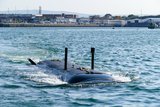
The push from industry to develop – and eventually operationally field – amphibious aircraft for defence missions has taken another step forward, with REGENT Defense and Norwegian company Noemi Aerospace providing recent updates on their respective seaglider and amphibious aircraft development pathways. Yet challenges to operationally field and develop these electric-propulsion platforms remain.
Speaking to Shephard, Eric Lithun, CEO at Noemi Aerospace, disclosed that the company plans to expand its vision for the commercial amphibious aircraft, named Noemi, to future mission profiles that include military dual-use applications. “Noemi was always designed as more than a single aircraft,” Lithun explained, adding that governments have already taken an
Our news & analysis is now part of Defence Insight®
A Basic-level or higher Defence Insight subscription is now required to view this content.


More from Air Warfare
-
![New US Army UH-60M Black Hawk order bridges uncertain path to MV-75 transition]()
New US Army UH-60M Black Hawk order bridges uncertain path to MV-75 transition
The US$234 million award for 16 Sikorsky UH-60Ms preserves near-term production, but funding uncertainty and an undefinitised contract leave the US Army’s long-term Black Hawk requirements unresolved.
-
![Rafale AI trials highlight shift towards operational fighter testbeds]()
Rafale AI trials highlight shift towards operational fighter testbeds
Dassault’s latest Rafale trials join Gripen E and F-16 testing as developers explore how artificial intelligence could support and control combat aircraft.
-
![V-22 Osprey safety upgrade moves towards wider fleet installation under $35.5 million deal]()
V-22 Osprey safety upgrade moves towards wider fleet installation under $35.5 million deal
Bell Boeing will supply 73 additional ODSSHI kits as NAVAIR prepares to introduce predictive drive-system monitoring across US and Japanese V-22 fleets.
-
![AFA 2026: US Air Force examines uncrewed cargo aircraft for contested logistics]()
AFA 2026: US Air Force examines uncrewed cargo aircraft for contested logistics
The US Air Force is evaluating demonstrators for uncrewed cargo missions as it considers logistics requirements across the Pacific and other contested environments.