Insight: How will the US Navy keep its EA-18G Growler EW aircraft flying until 2046?
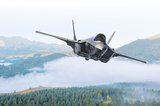
The Growler was the first newly designed electronic warfare aircraft produced in more than 35 years. (Photo: USN)
The carrier-based EA-18G Growler entered service in 2010 and is intended to remain in service until 2046. Shephard Defence Insight analyses the key operational technologies on the aircraft and the upgrade path needed to keep it flying and effective for another two decades.


Snapshot
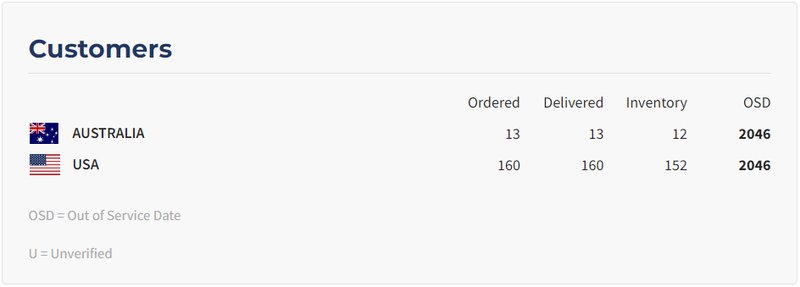
The EA-18G Growler is a variant in the F/A-18 family of aircraft that combines the F/A-18F Super Hornet platform with a sophisticated electronic warfare suite. It is in service with the USN and the RAAF. Australia and the US are both in the process of upgrading their respective fleets of EA-18Gs.
Additional information
What is the EA-18G’s role?
Built to replace the EA-6B Prowler, the Growler was the first newly designed electronic warfare aircraft produced in more than 35 years. The aircraft also retains all of the F/A-18E/F’s multi-mission capabilities to perform a wide range of enemy defence suppression missions. Two General Electric F414 engines power it.
The USN and the RAAF are the sole operators of the aircraft.
Related Articles
Australia receives an additional Growler and considers BBJ replacement
US Navy to transform at-sea Super Hornet and Growler training
US Navy F/A-18s return to the Hornets’ nest for Block III upgrades
The first test aircraft went into production in October 2004 and made its first flight in August 2006. The first production aircraft was delivered on 3 June 2008. IOC and full-rate production followed in the autumn of 2009, and the first deployment was in 2010.
What upgrades are planned for the EA-18G
USA
According to the USN, the extensive commonality between the F/A-18E/F and EA-18G, as well as its flexible platform, gives the Growler much-needed room for future upgrades and growth.
The navy is funding an ongoing F/A-18E/F and EA-18G Service Life Extension Programme, aimed at providing structural and subsystems enhancements. This will extend the F/A-18E/F/G’s service life and maintain sufficient aircraft inventory to meet the fleet’s operational requirements through to 2046.
This is complemented by another ongoing set of upgrades undertaken under the umbrella of the F-18 Operational Safety Improvement Program. These provide capability upgrades to the weapons and sensors, including the APG-79 radar, AN/ALQ-99 jammer (in advance of its eventual replacement by the Next Generation Jammer) and MIDS JTRS data link; and core avionics improvements, including integration of the Advanced Cockpit System and Advanced Capability Mission Computer.
Mercury Mission Systems has been contracted to provide data transfer units and high-definition video recorders for installation aboard the EA-18G Growler. Works are expected to be completed by 2024.
Australia
The RAAF’s EA-18G Growler capability is being overhauled through Project AIR 5349 Phase 6 - Advanced Growler, which will ensure commonality with USN aircraft.
The upgrades include: cooperative development of the Next-Generation Jammer system with the US to gradually replace the AN/ALQ-99; aircraft modifications, including sensor upgrades; anti-radiation missile war stock; longer-range and more advanced anti-radiation missiles; enhanced EW training ranges capability; facility improvements at Amberley near Brisbane and the Delamere Air training area near Katherine in the Northern Territory.
In February 2023, Australian radar company CEA Technologies was awarded a A$277 million ($207 million) contract to provide advanced capabilities for Australia’s EW ranges. The contract will include a number of fixed and portable emitters to support training exercises and strengthen capability across the joint force. It is the first contract to be awarded under Phase 6, which has an approved budget of more than A$2 billion ($1.5 billion).
What subsystems is the Growler equipped with?
Sensors
The Growler is fitted with the APG-79 Active Electronically Scanned Array (AESA) radar system.
Weapons
The armament includes AIM-120 missiles, AGM-88 HARM missiles, and AGM-154 JSOW glide bombs.
Electronic warfare
The EA-18G Growler is equipped with an ALQ-218 receiver, ALQ-99 jamming pods, communication countermeasures and satellite communications. The AN/ALQ-249, the Next Generation Jamming Pod, is in final development and will be the successor for the long-serving ALQ-99.
What is the cost of an EA-18G
USA
The USN procured a total of 160 aircraft between 2006 and 2016. The last seven aircraft cost $563.1 million, or just under $80 million each.
Australia
Australia’s 12 EA-18Gs were procured as part of Lot 38 in 2014-15. In 2017, 12 aircraft were delivered; however, one was subsequently lost to an engine fire in 2018.
In September 2021, the US State Department made a determination approving a possible FMS to the government of Australia of an EA-18G Growler aircraft, related defence services, and related equipment for an estimated cost of $125 million.
The new aircraft is intended to replace the platform lost in 2018. The aircraft was delivered in March 2023.
This article was created using data and analysis from Shephard’s Defence Insight market intelligence tool. For more information or to request a demo, visit our information page here.


More from Air Warfare
-
![Spain air focus: Mature UAV market rewards early supplier engagement]()
Spain air focus: Mature UAV market rewards early supplier engagement
Spain accounts for 5% of European military UAV spending, broadly in line with its share of the continent’s wider defence market. What sets the country apart, however, is how much of that spending has already been committed, reflecting Spain's earlier adoption of the capability.
-
![New US Army UH-60M Black Hawk order bridges uncertain path to MV-75 transition]()
New US Army UH-60M Black Hawk order bridges uncertain path to MV-75 transition
The US$234 million award for 16 Sikorsky UH-60Ms preserves near-term production, but funding uncertainty and an undefinitised contract leave the US Army’s long-term Black Hawk requirements unresolved.
-
![V-22 Osprey safety upgrade moves towards wider fleet installation under $35.5 million deal]()
V-22 Osprey safety upgrade moves towards wider fleet installation under $35.5 million deal
Bell Boeing will supply 73 additional ODSSHI kits as NAVAIR prepares to introduce predictive drive-system monitoring across US and Japanese V-22 fleets.
-
![AFA 2026: US Air Force examines uncrewed cargo aircraft for contested logistics]()
AFA 2026: US Air Force examines uncrewed cargo aircraft for contested logistics
The US Air Force is evaluating demonstrators for uncrewed cargo missions as it considers logistics requirements across the Pacific and other contested environments.