Long-range drone acquisition axed as Norway announces $11.75 billion spending uplift
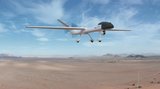
Norway and the UK are collaborating for the former to build up expertise in long-range drones; the UK operates GA-ASI’s MQ-9B Protector. (Photo: GA-ASI)
Norway’s funding boost will help the country reach 3.5% of GDP on defence spending by 2035, with autonomous systems part of the long list of priorities alongside frigate acquisition and development of a new Finnmark Brigade.


Norway has published plans to boost its defence spending by up to almost US$12 billion, outlining several priorities to improve its defence capabilities while also announcing programme cuts and delays.
On 27 March, Norway said that it would allocate a further NOK115 billion ($11.75 billion) to its Long-term Defence Plan over the next 10 years, bringing the country’s defence spend up to 3.5% of GDP. The new proposition extends its planning period out to 2040.
First presented in 2024, the original $163 billion plan covers the strategic direction of objectives for the country’s defence spending over 12 years. This additional funding
Our news & analysis is now part of Defence Insight®
A Basic-level or higher Defence Insight subscription is now required to view this content.


More from Air Warfare
-
![New US Army UH-60M Black Hawk order bridges uncertain path to MV-75 transition]()
New US Army UH-60M Black Hawk order bridges uncertain path to MV-75 transition
The US$234 million award for 16 Sikorsky UH-60Ms preserves near-term production, but funding uncertainty and an undefinitised contract leave the US Army’s long-term Black Hawk requirements unresolved.
-
![V-22 Osprey safety upgrade moves towards wider fleet installation under $35.5 million deal]()
V-22 Osprey safety upgrade moves towards wider fleet installation under $35.5 million deal
Bell Boeing will supply 73 additional ODSSHI kits as NAVAIR prepares to introduce predictive drive-system monitoring across US and Japanese V-22 fleets.
-
![AFA 2026: US Air Force examines uncrewed cargo aircraft for contested logistics]()
AFA 2026: US Air Force examines uncrewed cargo aircraft for contested logistics
The US Air Force is evaluating demonstrators for uncrewed cargo missions as it considers logistics requirements across the Pacific and other contested environments.
-
![Germany air focus: Europe’s leading near-term air market targets domestic industry]()
Germany air focus: Europe’s leading near-term air market targets domestic industry
Between 2026 and 2032, almost a quarter of EU aircraft spending is expected to come from Germany. While crewed programmes seek modernisation and replacement, uncrewed opportunities look to introduce entirely new capabilities, with both highlighting sovereignty and domestic production.