Franco-German alliance aims to resolve FCAS woes by end of April as dispute rolls on
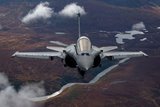
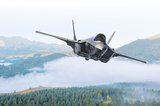
Reports from July 2025 indicated that France had asked Germany for approximately 80% of the workshare for the FCAS fighter jet. (Photo: Airbus)
The disagreement between French-German industry continues as both governments work to keep the programme alive and on track to develop and deliver a sixth-generation fighter jet.


The crisis-riddled Future Combat Air System (FCAS) sixth-generation fighter programme is aiming to secure a path forward by the end of April, as the dispute between industry partners rolls on.
As reported by Reuters, German Chancellor Friedrich Merz said that moderators from Germany and France had been appointed to find ways to ensure the future of the €100 billion (US$115.26 billion) future-fighter project by the end of April 2026.
The two leaders of France and Germany met ahead of the European Summit on 19 March to discuss the growing rift between the defence industry partners in the programme, yet no
Our news & analysis is now part of Defence Insight®
A Basic-level or higher Defence Insight subscription is now required to view this content.


More from Air Warfare
-
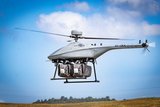
![Spain air focus: Mature UAV market rewards early supplier engagement]()
Spain air focus: Mature UAV market rewards early supplier engagement
Spain accounts for 5% of European military UAV spending, broadly in line with its share of the continent’s wider defence market. What sets the country apart, however, is how much of that spending has already been committed, reflecting Spain's earlier adoption of the capability.
-
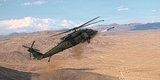
![New US Army UH-60M Black Hawk order bridges uncertain path to MV-75 transition]()
New US Army UH-60M Black Hawk order bridges uncertain path to MV-75 transition
The US$234 million award for 16 Sikorsky UH-60Ms preserves near-term production, but funding uncertainty and an undefinitised contract leave the US Army’s long-term Black Hawk requirements unresolved.
-
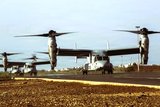
![V-22 Osprey safety upgrade moves towards wider fleet installation under $35.5 million deal]()
V-22 Osprey safety upgrade moves towards wider fleet installation under $35.5 million deal
Bell Boeing will supply 73 additional ODSSHI kits as NAVAIR prepares to introduce predictive drive-system monitoring across US and Japanese V-22 fleets.
-
![AFA 2026: US Air Force examines uncrewed cargo aircraft for contested logistics]()
AFA 2026: US Air Force examines uncrewed cargo aircraft for contested logistics
The US Air Force is evaluating demonstrators for uncrewed cargo missions as it considers logistics requirements across the Pacific and other contested environments.