Electric and hybrid aerial drone fleets are expanding their footprint
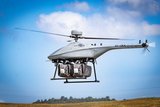
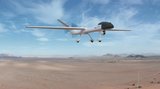
The UK Royal Navy declared in September last year that the T-150 was cleared for frontline use. (Photo: BAE Systems)
Advances in uncrewed aerial vehicles powered by renewable technologies are coming to the fore, with battery, hydrogen and solar propulsion challenging traditional fossil fuel-dependent models.


Electric-powered and hybrid uncrewed aerial vehicle (UAV) designs are rapidly maturing, as demonstrated by several new releases and tests from defence companies over the past 12 months.
Western countries, notably the US and France, are investing heavily in such devices, driven largely by their ability to be recharged in the field and reduced reliance on potentially vulnerable fuel depots and supply chains. Electric and hybrid UAVs are performing a range of battlefield tasks including reconnaissance, casualty evacuation, logistics and resupply, and even engaging in kinetic roles like anti-submarine warfare.
The next generation of these is likely to benefit from improved systems and technologies,
Our news & analysis is now part of Defence Insight®
A Basic-level or higher Defence Insight subscription is now required to view this content.


More from Air Warfare
-
![New US Army UH-60M Black Hawk order bridges uncertain path to MV-75 transition]()
New US Army UH-60M Black Hawk order bridges uncertain path to MV-75 transition
The US$234 million award for 16 Sikorsky UH-60Ms preserves near-term production, but funding uncertainty and an undefinitised contract leave the US Army’s long-term Black Hawk requirements unresolved.
-
![V-22 Osprey safety upgrade moves towards wider fleet installation under $35.5 million deal]()
V-22 Osprey safety upgrade moves towards wider fleet installation under $35.5 million deal
Bell Boeing will supply 73 additional ODSSHI kits as NAVAIR prepares to introduce predictive drive-system monitoring across US and Japanese V-22 fleets.
-
![AFA 2026: US Air Force examines uncrewed cargo aircraft for contested logistics]()
AFA 2026: US Air Force examines uncrewed cargo aircraft for contested logistics
The US Air Force is evaluating demonstrators for uncrewed cargo missions as it considers logistics requirements across the Pacific and other contested environments.
-
![Germany air focus: Europe’s leading near-term air market targets domestic industry]()
Germany air focus: Europe’s leading near-term air market targets domestic industry
Between 2026 and 2032, almost a quarter of EU aircraft spending is expected to come from Germany. While crewed programmes seek modernisation and replacement, uncrewed opportunities look to introduce entirely new capabilities, with both highlighting sovereignty and domestic production.