March drone digest: Long-range, low-cost loitering munitions are changing warfare economics
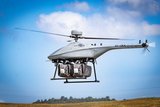
The LUCAS is a development of the FLM-136, which was reverse-engineered from the Iranian Shahed-136. (Photo: Spektreworks)
The effective use of the Shahed-136 in the Iran war has highlighted the need for countries to acquire a domestically produced, low-cost, long-range loitering munition, with the US, Turkey and European nations all at various stages of developing a similar capability.


Following the launch of Operation Epic Fury on 28 February 2026, which marked the beginning of the 2026 Iran war, Iran launched a series of retaliatory strikes using missiles and uncrewed aerial vehicles (UAVs) – primarily the Shahed-136.
As the conflict progressed through March, Iranian long-range drone strikes across the region continued against military bases and embassies in many of Iran’s neighbouring nations.
While US allies have intercepted large numbers of Shaheds, many have hit their targets. Iran’s use of the drones has therefore been effective, particularly when considering the staggeringly low unit cost of around US$20,000, combined with the vehicle’s reported range of
Our news & analysis is now part of Defence Insight®
A Basic-level or higher Defence Insight subscription is now required to view this content.

More from Air Warfare
-
![E-3 Sentry encryption equipment no longer meets US security requirements, says USAF]()
E-3 Sentry encryption equipment no longer meets US security requirements, says USAF
The US Air Force says the Sentry fleet’s DAR-400 encryptor can no longer keep pace with changing security requirements and warns that a failure could affect US operations and data security.
-
![New US Army UH-60M Black Hawk order bridges uncertain path to MV-75 transition]()
New US Army UH-60M Black Hawk order bridges uncertain path to MV-75 transition
The US$234 million award for 16 Sikorsky UH-60Ms preserves near-term production, but funding uncertainty and an undefinitised contract leave the US Army’s long-term Black Hawk requirements unresolved.
-
![V-22 Osprey safety upgrade moves towards wider fleet installation under $35.5 million deal]()
V-22 Osprey safety upgrade moves towards wider fleet installation under $35.5 million deal
Bell Boeing will supply 73 additional ODSSHI kits as NAVAIR prepares to introduce predictive drive-system monitoring across US and Japanese V-22 fleets.
-
![AFA 2026: US Air Force examines uncrewed cargo aircraft for contested logistics]()
AFA 2026: US Air Force examines uncrewed cargo aircraft for contested logistics
The US Air Force is evaluating demonstrators for uncrewed cargo missions as it considers logistics requirements across the Pacific and other contested environments.