How the US Air Force plans to use data analytics to enhance the roles of airmen and assets
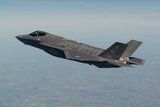
Analytics have been deployed in the development of hypersonic technologies. (Photo: US Air Force)
The USAF has allocated nearly US$500 million to further the deployment of this type of technology in FY2026. It envisions using analytics to enhance sensors, weapons, missiles and human performance.


The US Air Force (USAF) foresees a broader use of data analytics capabilities to improve its equipment and to increase the effectiveness of airmen in both enlisted and officer ranks, from the operational to the senior leadership decision levels.
In FY2026, the branch will invest close to US$500 million in multiple acquisition, development and research efforts to deepen the deployment of this type of technology in several areas such as cyber, C4ISR, electronic warfare (EW), intelligence, logistics, targeting, training and sensing.
In terms of equipment, the USAF’s programmes are focusing on enhancing operations and maintenance support and upgrading aerospace sensors,
Our news & analysis is now part of Defence Insight®
A Basic-level or higher Defence Insight subscription is now required to view this content.



More from Air Warfare
-
![AUSA 2026: New multiwarhead loitering munition enters increasingly competitive market]()
AUSA 2026: New multiwarhead loitering munition enters increasingly competitive market
Heaviside Industries has unveiled its new Tyr loitering munition at AUSA 2026 in Washington, DC, joining a growing field of manufacturers seeking to capitalise on billions of dollars in anticipated military spending.
-
![Middle Eastern demand opens fresh export prospects for Lockheed Martin’s F-35 fighter jet]()
Middle Eastern demand opens fresh export prospects for Lockheed Martin’s F-35 fighter jet
A proposed Saudi Arabian purchase of 48 stealth fighters could signal a broader regional opportunity for the F-35 as European programmes mature.
-
![Akinci: How Baykar turned the UAV into an African and Middle Eastern export success]()
Akinci: How Baykar turned the UAV into an African and Middle Eastern export success
From billion-dollar industrial partnerships in the Middle East to rapid military off-the-shelf deliveries in Africa, Baykar has tailored the Akinci to the needs of very different customers. Defence Insight data shows how flexibility, price and Turkish supply-chain independence have helped drive exports.
-
![US Pentagon pushes procurement of dismounted counter-UAS capabilities]()
US Pentagon pushes procurement of dismounted counter-UAS capabilities
The US services are investing in lighter, autonomous and networked systems to protect mobile troops from drone threats.