Eurosatory 2026: How the deep-strike, loitering munition market skyrocketed to $13.8 billion in three years
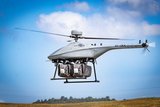
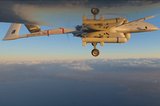
Fire Point describes the FP-1 and FP-2 as cost-effective strike drones capable of engaging diverse targets, even in GPS-denied environments. (Photo: author)
In the last three years, the long-range, deep-strike, loitering munition sector has developed from nothing into a market worth an estimated US$13.169 billion, according to Shephard’s Defence Insight.
Speaking at Eurosatory, Ihor Fedirko, CEO of the Ukrainian Council of Defence Industry, stated that today Ukraine has 56 publicly known deep-strike uncrewed systems conducting strikes deep into Russia daily. This compares to having no publicly known deep-strike-capable system three years ago, demonstrating the growth in capability.
Iryna Terekh, CEO and CTO of Fire Point, added that between five and 15 of these daily strikes are being conducted by her company’s drones alone, with the company’s FP-1, FP-2 and FP-5 Flamingo systems on display at the show in Paris.
Related Articles
March drone digest: Long-range, low-cost loitering munitions are changing warfare economics
The rapid growth has been facilitated, according to Terekh, by the immediate need for these systems in Ukraine, which created a combat-driven innovation cycle. This was aided by the imposed transparency and reduced bureaucracy in the Ukrainian defence industry, which has allowed companies to develop and field new products rapidly.
Cost calculation
The use of long-range, deep-strike systems in the Russo-Ukrainian War and the 2026 Iran War has heightened the cost calculations at the root of the effectiveness of these capabilities.
Deep-strike systems, such as the Fire Point FP-1 and Shahed-136, can be produced at lower unit costs, with the latter estimated at US$20,000. The cheap aircraft can be effectively used to strike high-value targets, eliminating them, or prompt the deployment of expensive counter-uncrewed aerial system (CUAS) measures to intercept them. Both scenarios result in the defender spending far more than the attacker, tilting the economics of war in the attacker’s favour; a calculation the four main participants in these two conflicts have realised.
Ukraine, for its part, knows this cost calculation well. For one, it knows these systems must be low-cost. Terekh stated at Eurosatory that only 10% of these long-range, deep-strike missions are successful. Therefore, a manufacturer’s ability to produce these systems at low expense and in large numbers is vital, underscoring the need to incorporate considerations of the drones’ cost and future scalability into the research and development of any long-range strike platform from day one.

The country also understands that these low-cost drones can strike high-value targets. Fedirko stated at a Eurosatory panel that these aircraft have impacted around 25% of Russia’s total oil refining capacity, which, according to Halyna Yanchenko, chair of the parliamentary task force on investment in the Ukraine defence industry, has cost Russia $13 billion, dubbing the damage done “Ukrainian deep-strike sanctions”.
Even when no target is hit, as Fedirko explained, the use of the capability in volume, facilitated by low unit cost and high production, necessitates that Russia stretch its air defence thin across a large area, opening windows for future, successful attacks.
Market size of this capability
Despite Ukraine, Russia and later Iran popularising this capability, the market for these types of drones has grown massively. For example, as Shephard reported in the March Drone Digest, the US company Spektreworks, having seen the effectiveness of the Shahed-136, reverse-engineered the Shahed-136 to produce the FLM 136 target drone. From that, it produced the Low-Cost Uncrewed Combat Attack System (LUCAS), which has been effectively used throughout the 2026 campaign against Iran.
Defence Insight forecasts that this usage of the LUCAS is the beginning of the US long-range strike ambitions and, due to the Pentagon’s wider Drone Dominance Program (DDP), Defence Insight estimates that the US could spend approximately $5.4 billion to acquire more than 150,000 low-cost strike drones, with major procurement contracts potentially beginning in 2027.
It is not just the US that is forecast to invest heavily in this capability; the entire long-range, deep-strike loitering munition market is estimated at $13.169 billion. Europe accounts for a large share of this spending due to the ongoing Russo-Ukrainian War, but other European nations have also taken note.
In February 2026, Germany, France, Italy, Poland, Sweden and the UK signed a letter of intent to formalise their commitment to jointly develop a low-cost, long-range, deep-strike loitering munition under the European Long-range Strike Approach (ELSA) initiative.
Across the six nations involved in the ELSA project, Shephard estimates that, ultimately, $2.19 billion could be spent on more than 10,000 long-range, low-cost loitering munitions, with Germany forecast to spend the most at $600 million.
Countries are also investing in sovereign options. For example, France has Chorus, a Renault- and Turgis Gaillard-produced drone that, depending on testing of early versions, could result in the Directorate General of Armaments (DGA) granting up to €1 billion ($1.16 billion) for the drone’s mass production and acquisition over 10 years.
Likewise, the UK has Project Brakestop, which requires an effector capable of delivering a 200-300kg payload over a target range of 600km at a speed of around 600km/h. Defence Insight estimates this effort could be worth more than $220 million.
Related Programmes in Defence Insight
European Long-range Strike Approach (ELSA) [Germany]
Deep-strike, low-cost, loitering munition [USA]
Chorus (Uncontracted) [France]
Related Equipment in Defence Insight
More from Eurosatory 2026
-
Eurosatory 2026: IDV expands with new Viking and CL2X UGV
At Eurosatory 2026, uncrewed ground vehicles (UGVs) are front and centre of IDV’s display, with a new variant of the Viking and the new CL2X on display.
-
Eurosatory 2026: New public security needs drive personal protection equipment modernisation
European law enforcement and public security agencies are entering a new cycle of investment in personal protection equipment (PPE), driven by evolving threat profiles, officer welfare requirements and advances in materials technology.
-
Eurosatory 2026: Recovery, reconnaissance, autonomy and air defence shape land systems developments
New recovery vehicles, reconnaissance platforms, autonomous fire-support systems and short-range air-defence capabilities on display at Eurosatory 2026 highlighted how land forces are adapting to evolving battlefield requirements.
-
Eurosatory 2026: Ukraine drives European artillery renaissance
European governments have ordered nearly 1,400 self-propelled howitzers and more than 400 multiple-launch rocket systems since 2022 as lessons from Ukraine reshape long-range fires requirements across the continent.