Military Training magazine: recognition training, CBRN training and more
Read the latest edition of Military Training for free in our app or on your desktop.


What’s inside this edition:
COMMENT: Same requirement, different answer
The pilot shortage remains a pressing problem on both sides of the Atlantic, but the US and UK have taken different approaches to addressing the issue.
Features include:
Friend or foe?
Systems to help military personnel peer through the fog of war are becoming ever more sophisticated, but troops still need to know what they are looking at, making recognition training more important than ever.
Fighting for a market
US industries often have the resources and political backing to dominate international markets. The simulation and technology sector is no different, but several European companies are challenging the status quo with innovative and unique solutions.
One step ahead
As the threats facing warships’ crews are constantly evolving, so too must the training systems and procedures they undergo. AI threats, cyberattacks and advanced technologies are challenging training providers to stay one step ahead.
The silent killers
The threat of CBRN attacks from state and non-state actors continues to grow. Shephard looks at the training being provided by NATO to counter this threat.
Under lock and key
With the increased networking of simulation systems comes the increased opportunity for adversaries to steal data. The answer, as many simulator integrators are now doing, is to up the ante when it comes to cybersecurity.
Bonus content coming soon.



More from Training
-
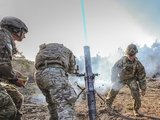
![Cubic tailors mortar simulator for the US Army]()
Cubic tailors mortar simulator for the US Army
The company’s mortar trainer received improvements based on soldier’s feedback.
-
![Saab expands footprint in the US]()
Saab expands footprint in the US
The company will operate in two new locations in the coming years to better support US services.
-
![How terrain management capabilities can improve military training]()
How terrain management capabilities can improve military training
This type of tool provides more realistic training easing the incorporation of new scenarios that accurately represent the threats of the battlefield.
-
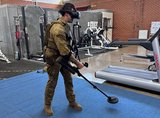
![I/ITSEC 2024: Australian Army approaches second phase of countermining training]()
I/ITSEC 2024: Australian Army approaches second phase of countermining training
The Engineering Corps has been conducting individual instruction using FLAIM Systems’ Sweeper and should start collective deployments in 2025.
-
![I/ITSEC 2024: Zeiss introduces Velvet 4K SIM projector for night flight simulation]()
I/ITSEC 2024: Zeiss introduces Velvet 4K SIM projector for night flight simulation
The next-generation platform is motion-compatible and can be used in OTW and NVG applications.
-
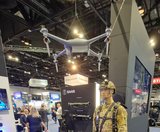
![I/ITSEC 2024: Saab introduces UAV live training capability]()
I/ITSEC 2024: Saab introduces UAV live training capability
The system can be used to prepare soldiers for both drone offensive operations and CUAS missions.