


Cubic tailors mortar simulator for the US Army
The company’s mortar trainer received improvements based on soldier’s feedback.


Airbus Helicopters has selected Pratt & Whitney’s PW206B3 engine to power the Airbus H135 IFR-certified helicopter it is proposing for the US Navy’s helicopter trainer replacement programme, the company announced on 6 March.
According to Airbus, the H135 will support the navy in providing more efficient training to new pilots in environments and scenarios most similar to the navy’s existing rotorcraft fleet. The technologically advanced aircraft features the Helionix avionics system with colour digital multi-function displays, a four-axis autopilot, integrated flight management system and engines with FADEC and one engine inoperative training mode.
Chris Emerson, president of Airbus Helicopters and head of the North America region, said: ‘Pratt & Whitney engines power a large portion of the H135 fleet flying in North America, and we feel this choice reinforces the H135 as the best-value solution for the navy’s initial entry rotary-wing pilot training requirement.
‘In partnership with Pratt & Whitney, Airbus is offering the navy an enhanced training capability that will provide future naval aviators with the most realistic training available to prepare them for the fleet operations they will perform in more advanced aircraft.’
If selected, Airbus will manufacture the H135 for the navy at its production facilities in Columbus, Mississippi.

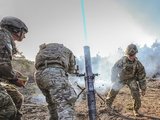
The company’s mortar trainer received improvements based on soldier’s feedback.

The company will operate in two new locations in the coming years to better support US services.

This type of tool provides more realistic training easing the incorporation of new scenarios that accurately represent the threats of the battlefield.
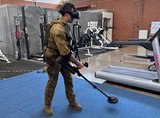
The Engineering Corps has been conducting individual instruction using FLAIM Systems’ Sweeper and should start collective deployments in 2025.
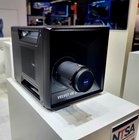
The next-generation platform is motion-compatible and can be used in OTW and NVG applications.
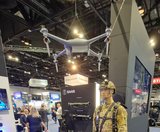
The system can be used to prepare soldiers for both drone offensive operations and CUAS missions.

Connect with us on socials


