US Coast Guard sets sail in search of robotics and CUAS capabilities
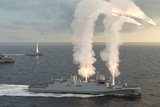
A Coast Guard officer deploys a drone from the USCG Cutter Blackfin. (Photo: US Coast Guard)
The USCG has been increasing efforts to accelerate the process to develop, procure, deploy and sustain autonomous and counter-uncrewed systems across its fleet.


The US Coast Guard (USCG) has been rapidly progressing with its plans to increase the use of autonomous and counter-robotic capabilities. In line with its Force Design 2028 (FD 2028) strategy, the service has taken multiple measures in the last few months to accelerate the process to acquire and field those types of solutions.
“Robotics and autonomous systems are anticipated to revolutionise Coast Guard operations, leading to significant impacts to securing our border, facilitating commerce and responding to contingencies,” the service claimed in a recent press release.
The most recent USCG step taken in this direction was the announcement of
Our news & analysis is now part of Defence Insight®
A Basic-level or higher Defence Insight subscription is now required to view this content.


More from Naval Warfare
-
![China’s mineral processing dominance exposes naval supply chain vulnerabilities]()
China’s mineral processing dominance exposes naval supply chain vulnerabilities
Competition for critical minerals, and China’s dominance of their processing, is emerging as a decisive factor in future naval procurement programmes.
-
![Suppliers await next step in Australia’s mine warfare transition]()
Suppliers await next step in Australia’s mine warfare transition
Australia’s mine countermeasure capability remains in flux as the Huon-class nears retirement, but accelerated investment in autonomous systems is opening a path for industry.
-
![Can the US Navy ask Indo-Pacific allies to do more while training with them less?]()
Can the US Navy ask Indo-Pacific allies to do more while training with them less?
As the Iran War draws US ships and marine corps units away from the Indo-Pacific, curtailed exercises and a temporary carrier gap are exposing tensions between Washington’s demand for more self-reliant allies and the joint training needed to realise that ambition.
-
![How could Rheinmetall’s GMF 140 fit with ongoing programmes in North America?]()
How could Rheinmetall’s GMF 140 fit with ongoing programmes in North America?
With Canada committed to its River-class replacement and the USN pursuing a lower-cost frigate, Rheinmetall will need to demonstrate where the GMF 140 can fill a capability gap in the North American fleet.
-
![Australian industry programme builds pipeline for Virginia-class sustainment]()
Australian industry programme builds pipeline for Virginia-class sustainment
Australian businesses can now bid to support Virginia-class submarine sustainment in Western Australia, as momentum around the Henderson Defence Precinct also builds.