US Coast Guard announces $350 million investment in robotics and autonomous systems
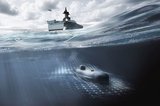
VideoRay Defender remotely operated vehicle. (Photo: VideoRay)
The USCG will use part of this funding to acquire SkyDio X10D short-range uncrewed aircraft systems, VideoRay Defender remotely operated vehicles and Qinetiq Squad Packable Utility and mini-SPUR robots.


The US Coast Guard (USCG) announced on 24 September a US$350 million package for the procurement of robotics and autonomous systems as part of its effort to improve and increase its inventory of uncrewed and counter-unmanned platforms.
The first investments will cover the acquisition of 125 SkyDio X10D short-range unmanned aircraft systems (SR-UAS), 16 VideoRay Defender remotely operated vehicles (ROVs) and six Qinetiq Squad Packable Utility Robot (SPUR) and 12 mini-SPUR robots.
Anthony Antognoli, USCG programme executive officer for Robotics and Autonomous Systems (RAS), claimed that the new capabilities will “provide increased domain awareness, mitigating risk and enhancing mission
Our news & analysis is now part of Defence Insight®
A Basic-level or higher Defence Insight subscription is now required to view this content.


More from Naval Warfare
-
![China’s mineral processing dominance exposes naval supply chain vulnerabilities]()
China’s mineral processing dominance exposes naval supply chain vulnerabilities
Competition for critical minerals, and China’s dominance of their processing, is emerging as a decisive factor in future naval procurement programmes.
-
![Suppliers await next step in Australia’s mine warfare transition]()
Suppliers await next step in Australia’s mine warfare transition
Australia’s mine countermeasure capability remains in flux as the Huon-class nears retirement, but accelerated investment in autonomous systems is opening a path for industry.
-
![Can the US Navy ask Indo-Pacific allies to do more while training with them less?]()
Can the US Navy ask Indo-Pacific allies to do more while training with them less?
As the Iran War draws US ships and marine corps units away from the Indo-Pacific, curtailed exercises and a temporary carrier gap are exposing tensions between Washington’s demand for more self-reliant allies and the joint training needed to realise that ambition.
-
![How could Rheinmetall’s GMF 140 fit with ongoing programmes in North America?]()
How could Rheinmetall’s GMF 140 fit with ongoing programmes in North America?
With Canada committed to its River-class replacement and the USN pursuing a lower-cost frigate, Rheinmetall will need to demonstrate where the GMF 140 can fill a capability gap in the North American fleet.
-
![Australian industry programme builds pipeline for Virginia-class sustainment]()
Australian industry programme builds pipeline for Virginia-class sustainment
Australian businesses can now bid to support Virginia-class submarine sustainment in Western Australia, as momentum around the Henderson Defence Precinct also builds.