Fincantieri’s Vulcano Class: a new era of versatility and innovation in naval operations
Logistic support ships (LSS) are essential for sustained naval operations, especially during extended deployments far from home ports.


Enjoy free access to this sponsored article, all content provided by Fincantieri
Their roles are multifaceted and crucial for maintaining the operational readiness of naval task forces. One of their primary functions is Replenishment at Sea (RAS), where they deliver fuel, ammunition, food, and spare parts to combat ships, allowing these vessels to continue their missions without the need for port visits. Additionally, some LSS are equipped with onboard medical and repair facilities, effectively serving as mobile support bases that can provide immediate assistance in times of need. The mobility and reach of LSS enable naval task forces to operate globally, independent of shore-based logistics, thus extending their operational range and effectiveness. Furthermore, by taking on the logistical burden, LSS act as force multipliers, freeing up combat ships to concentrate on their mission objectives rather than having to return to port for resupply. This comprehensive support structure ensures that naval operations remain seamless and uninterrupted, regardless of their location.
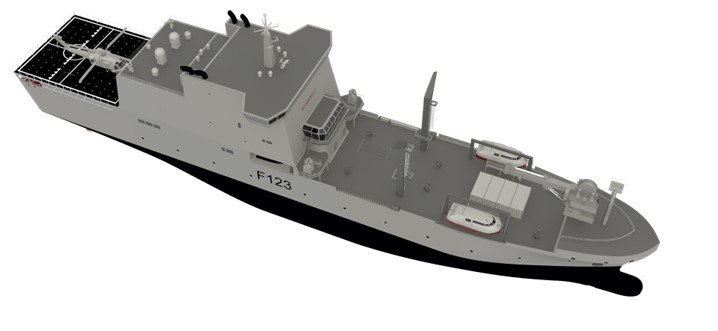
The Vulcano-class LSS is designed by Fincantieri to provide comprehensive logistical support to naval fleets, ensuring sustained operations at sea. These ships are equipped to transport and transfer essential supplies – such as fuel, water, ammunition, food, and spare parts – while also offering medical, maintenance and humanitarian assistance capabilities.
The Vulcano-class vessels are integral to the Italian Navy’s fleet renewal plan, enhancing operational flexibility and sustainability. Their capabilities extend beyond traditional naval support, positioning them as versatile assets in both military and humanitarian missions.
Key Features and Innovation
The Vulcano Class logistic support ships are distinguished by several key features and innovations that enhance their operational capabilities and versatility. One of the standout features is the Hybrid Propulsion System, which employs a Combined Diesel and Electric, Alternating Current (CODLAD) setup. This system integrates diesel engines with electric motors, allowing the ships to achieve speeds of up to 20 knots.
In terms of medical support, the Vulcano Class is equipped with advanced medical facilities, including a fully operational hospital. This hospital boasts operating rooms, radiology and analysis rooms, a dental clinic, and accommodation for up to 17 seriously injured patients, making the ships capable of providing comprehensive medical care in various situations.
Cargo and replenishment capabilities are another significant aspect of these ships. They can carry up to 15,500 tons of cargo, encompassing various types of fuel such as diesel and aviation fuel, as well as fresh water, ammunition, food, and spare parts. This extensive carrying capacity ensures that the ships can support prolonged operations without the need for frequent resupply.
Environmental considerations have also been a priority in the design of the Vulcano Class. The ships are equipped with low-emission generators and electric propulsion motors, which help to minimize their environmental impact. This design choice reflects a commitment to sustainability and environmental stewardship.
Additionally, the Vulcano Class ships are designed for multi-role operations. Beyond their primary function of military logistics, they can support civil protection efforts, humanitarian aid, and disaster relief operations. This versatility makes them invaluable assets in both military and civilian contexts, capable of responding to a wide range of scenarios and needs.
Starting from well proven Vulcano Class, Fincantieri has derived a design of a smaller unit, keeping the essential key characteristics and features.
International Collaboration and tailoring naval programs to regional needs
Under the Franco-Italian LSS Program led by OCCAR, Fincantieri has built at the Castellammare di Stabia shipyard the forward sections of four LSS vessels for the French Navy, based on the Italian Vulcano design.
Fincantieri approach is built on a fundamental belief that collaboration should be both strategic and empowering. We focus on specialised naval programs developed in close collaboration with local companies, customised to meet the specific requirements of each country, thereby ensuring both relevance and substantial impact.
Together, LSS and robust maintenance programs ensure operational readiness, resilience and strategic advantage for naval forces.



More from Industry Spotlights
-
![Orchestrating operational readiness across every defence domain]()
Orchestrating operational readiness across every defence domain
Are all systems ready for the next mission? Have upgrades been applied? Are all assets aligned to deploy together, on time and fully prepared? In modern defence operations, readiness is no longer measured platform by platform. It is measured by how well people, assets, data and decisions move together — across land, sea and air.
-
![Extending mission readiness: where XR adds real value in pilot, crew and maintenance training]()
Extending mission readiness: where XR adds real value in pilot, crew and maintenance training
Extended reality (XR) is becoming increasingly relevant in military aviation training, adding a flexible layer to an integrated ecosystem spanning the pilot, crew, and maintenance domains.
-
![Dominating the spectrum: ASELSAN’s EW capabilities take center stage at MSPO 2026]()
Dominating the spectrum: ASELSAN’s EW capabilities take center stage at MSPO 2026
ASELSAN is showcasing its advanced electronic warfare (EW) capabilities at MSPO 2026, highlighting technologies designed to detect, analyse, disrupt and deceive threats across increasingly contested electromagnetic environments.
-
![“Creating a decision advantage”: how C-UAS is evolving to reduce the operator burden]()
“Creating a decision advantage”: how C-UAS is evolving to reduce the operator burden
In Conversation… Speaking to Shephard’s Gerrard Cowan, Dr Brian Shand, Director – Advanced Concepts & Technology at L3Harris, explains how, as operators face growing numbers of low-cost drones, C-UAS providers must focus on reducing operator workload, transforming fragmented sensor data into effective decision-making.
-
![Shield the warfighter, win the fight (video)]()
Shield the warfighter, win the fight (video)
BAE Systems’ Intrepid Shield™ approach delivers full-spectrum electromagnetic protection to detect, exploit, and counter advanced threats.
-
![How joint ventures are expanding Rheinmetall's munitions portfolio (video)]()
How joint ventures are expanding Rheinmetall's munitions portfolio (video)
Roman Köhne, CEO of Rheinmetall's Weapon and Ammunition Division, discusses the company's announcements at Eurosatory 2026, including developments in defence technology, precision systems, industrial partnerships and future capability programmes.