Saudi Arabia inks deal with Spain to advance shipbuilding localisation
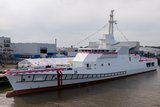
Pictured is the second Avante 2200-derived corvette for Saudi Arabia, Al Diriyah. (Photo: Navantia)
A deal with the Spanish shipbuilder is set to support Saudi Arabia’s goal of fully localising critical shipbuilding skills.


The Saudi Arabian MoD and General Authority for Military Industries (GAMI) have signed an MoU with Spanish shipbuilder Navantia to acquire and build multi-mission combat ships. No indication was given as to whether these would be based on an existing design.
The deal seeks to improve the readiness of the Royal Saudi Naval Forces and support the Kingdom’s strategic goal to fully localise shipbuilding, integration of combat systems and ship maintenance.
The MoU will also focus on combat systems integration, systems design and engineering, hardware design, software development, testing, verification and other skills.
The agreement expands on Navantia’s existing relationship
Our news & analysis is now part of Defence Insight®
A Basic-level or higher Defence Insight subscription is now required to view this content.


More from Naval Warfare
-
![AUKUS heavyweight torpedo test raises questions over future armed UUV requirements]()
AUKUS heavyweight torpedo test raises questions over future armed UUV requirements
A heavyweight torpedo firing from the Royal Navy’s uncrewed submarine XV Excalibur suggests a shift beyond surveillance, with allied navies eyeing strike roles for large autonomous undersea vessels.
-
![Five years on: where could opportunities emerge next for AUKUS Pillar II?]()
Five years on: where could opportunities emerge next for AUKUS Pillar II?
Payload commonality, combat systems and electronic warfare are emerging as likely priorities as the trilateral partnership balances building submarines with sharing industrial ecosystems.
-
![Singapore expands maritime presence with future-ready Sentinel OPV]()
Singapore expands maritime presence with future-ready Sentinel OPV
Singapore is building space for uncrewed systems and future technologies into its new Sentinel-class OPVs, reflecting a wider move towards adaptable vessels capable of maintaining persistent maritime presence.