Italy orders two ships as work begins on others along with deliveries and updates
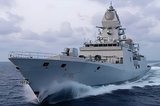
Italy has ordered two more PPA ships from Fincantieri. (Photo: Leonardo)
The Italian Navy is being refreshed with two new ships ordered, while in the past six months steel was cut for a new frigate, an enhanced frigate was delivered and Horizon-class frigates passed a design review.


The Italian Navy is to receive two new Pattugliatori Polivalenti d’Altura (PPA) Multipurpose Combat Ships in the next five years as replacements for ships earmarked for Indonesia.
The contract will be managed by OCCAR (Organisation Conjointe de Coopération en matière d’Armement) with Fincantieri as lead contractor and Leonardo as partner.
Fincantieri has said the value of the contract to the company for “the two new units is approximately €700 million (US$822 million) which includes works already carried out on the previous units now destined for Indonesia”.
The first Indonesian ship, KRI Brawijaya, is scheduled to arrive in September,
Our news & analysis is now part of Defence Insight®
A Basic-level or higher Defence Insight subscription is now required to view this content.


More from Naval Warfare
-
![From the Baltic to the Gulf: where USV procurement is heading next]()
From the Baltic to the Gulf: where USV procurement is heading next
Saildrone’s new Copenhagen base is one sign of a larger shift, as navies globally turn to uncrewed vessels for surveillance and mine clearance.
-
![Israeli Navy looks to expand as war reshapes future force requirements]()
Israeli Navy looks to expand as war reshapes future force requirements
Israel’s navy is preparing for a larger and more technically diverse role, but its ambitions could be impacted by supply chain restrictions, accelerating demand for domestic naval production as well as autonomous maritime capabilities.
-
![Quantum sensing gathers pace as navies eye undersea advantage]()
Quantum sensing gathers pace as navies eye undersea advantage
As AI dominates defence conversations, industry increasingly points to quantum sensing as the technology set to change submarine and uncrewed underwater vehicle operations.
-
![How France’s SNLE 3G programme is reshaping the naval nuclear industrial base]()
How France’s SNLE 3G programme is reshaping the naval nuclear industrial base
Extending far beyond a four-submarine replacement programme, France’s ballistic missile submarine effort is a decades-long industrial initiative designed to preserve the country’s ability to build and sustain nuclear-powered strategic platforms.