Saab relaunches third upgraded Gotland-class submarine
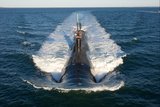
HMS Halland is the third and last of the class to be upgraded. (Photo: Saab)
More than 20 of the central systems in HMS Halland were replaced as part of the upgrade, including sensors and command systems.


Saab has relaunched the Swedish Navy’s HMS Halland Gotland-class submarine after putting it through a major mid-life upgrade (MLU) which has already been performed on two others of the class with the service.
The upgrade was performed at Saab’s shipyard in Karlskrona and includes new technologies and systems of the same type that will be used in upcoming Blekinge-class submarines.
Saab stated on 18 March 2022 that the extensive MLU, worth SEK1.1 billion (US$116 million), would include an overhaul and upgrade to the boat’s combat system.
Related Articles
Saab completes HMS Uppland upgrade
Saab delivers upgraded Gotland-class submarine to Sweden
Saab signs contract for MLU of third Gotland-class submarine
The upgrade will enable HMS Halland to carry out maritime missions for many years to come with new capabilities, alongside her sister submarines HMS Gotland and HMS Uppland which have previously undergone similar mid-life modifications.
The three-boat Gotland class were constructed between 1990-1997 and had already received upgrades in the early years of their service life, before the latest upgrade process.
Mats Wicksell, head of Business Area Kockums, Saab argued the upgraded submarines are a key capability.
“Securing critical underwater infrastructure and sea lanes is more important than ever,” Wicksell said.
“With HMS Halland, the Swedish Navy, and by extension NATO, is given additional muscle to defend and monitor the Baltic Sea.”
The Gotland-class boats are expected to remain in service until beyond 2035. In 2024 the Swedish Parliamentary Defence Committee argued that the preliminary design of a new generation of submarines to replace the boats should begin with the first boat in service by 2038.
Related Programmes in Defence Insight
UB30 Next Generation Submarine/Gotland Class Replacement [Sweden]
Related Equipment in Defence Insight


More from Naval Warfare
-
![The UK joins the movement towards joint procurement]()
The UK joins the movement towards joint procurement
The UK will spend an estimated US$3.89 billion over the next decade in joint naval programmes, a lot of which will be in cooperation with Norway.
-
![Rheinmetall’s GMF 140: Ambitious frigate or market misfit?]()
Rheinmetall’s GMF 140: Ambitious frigate or market misfit?
Rheinmetall has unveiled its first next-generation frigate design, showing ambitions to compete as a surface combatant prime contractor. While the company is targeting North America, analysts believe the concept may be better positioned for future European programmes.
-
![US Navy begins SPY-6(V)4 radar testing ahead of first Arleigh Burke destroyer backfit]()
US Navy begins SPY-6(V)4 radar testing ahead of first Arleigh Burke destroyer backfit
Wallops Island trials will validate the next-generation radar's combat system integration before its installation aboard USS Pinckney, the first Flight IIA destroyer to receive the SPY-6(V)4 upgrade.