Poland shortlists Thyssenkrupp Marine Systems for Project Miecznik
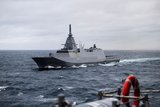
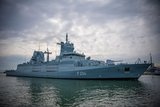
The MEKO 200 is a multi-role frigate designed for export markets. (Photo: thyssenkrupp Marine Systems)
ThyssenKrupp Marine Systems has been selected to potentially provide the Polish Navy with Meko frigates.


ThyssenKrupp Marine Systems has been shortlisted to prepare a concept design and feasibility study for the Polish Navy.
This has occurred as part of Project Miecznik, which aims to acquire multi-mission frigates for the Navy.
Part of the offer is to provide to Poland the Meko A-300 PL, the most up-to-date variant of the Meko technology frigate family.
If selected, ThyssenKrupp Marine Systems will form an enduring technology partnership with Polish Industry for the building, integration and lifecycle support of the Meko A-300 PL frigates entirely in Poland.
Three frigates are intended to be procured as part of Project Miecznik, but the initial focus is on acquiring a single frigate
Shephard Defence Insight reports that the total cost of the three frigates is estimated to be between $1.8 billion to $2.3 billion.
The programme has been hindered in its progress with fears that austerity measures caused by COVID-19 would force it to be cancelled.
Later, in March 2021, an important deadline was missed, as the intention was that the contract to build the frigates would be signed by the end of the first half of 2021.
However, confidence remains high that the timeline of the programme will not be significantly delayed.
Related Equipment in Defence Insight


More from Naval Warfare
-
![Australian industry programme builds pipeline for Virginia-class sustainment]()
Australian industry programme builds pipeline for Virginia-class sustainment
Australian businesses can now bid to support Virginia-class submarine sustainment in Western Australia, as momentum around the Henderson Defence Precinct also builds.
-
![South Korea, Japan and Turkey vie for US shipbuilding access in future frigate contest]()
South Korea, Japan and Turkey vie for US shipbuilding access in future frigate contest
Washington’s search for a foreign-built frigate could hand South Korea, Japan and Turkey a larger prize than a double-hull order: a foothold inside the US shipbuilding industrial base.
-
![Japan’s FY2027 budget bets on stand-off systems to offset demographic decline]()
Japan’s FY2027 budget bets on stand-off systems to offset demographic decline
Japan’s FY2027 defence budget backs stand-off strike, a 17-aircraft MQ-9B buy and a declared bid to lead the world in uncrewed maritime assets, alongside new frigates, submarines and support ships.
-
![Russia’s uncrewed boat portfolio hints at future naval demand]()
Russia’s uncrewed boat portfolio hints at future naval demand
Ukrainian intelligence has catalogued more than 20 Russian uncrewed surface vessels, revealing a portfolio weighted towards mine warfare and logistics, with implications for Western naval investment.
-
![Ukraine’s new long-range 12m autonomous vessel can deploy other drones]()
Ukraine’s new long-range 12m autonomous vessel can deploy other drones
Ukraine’s UForce unveiled the MV11 uncrewed surface vessel, designed to launch and support other naval drones at sea, fuelling debate over the future of autonomous maritime task groups.