MBDA to provide Sea Ceptor naval defence systems for Polish Miecznik-class frigates
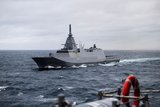
Poland’s Miecznik frigates will be expected to enter service later this decade. (Image: Babcock)
The Miecznik (Swordfish) programme, a multi-role frigate project for the Polish Navy, was first reported in 2014 as a multi-role coastal patrol vessel.


Poland’s new Navy’s three new Miecznik-class frigates will be fitted with MBDA’s Sea Ceptor naval air defence system under a contract announced on 12 January.
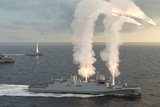
The new generation naval air defence system Sea Ceptor has been designed to protect naval vessels from modern air and surface threats, such as supersonic anti-ship missiles and unmanned surface vessels, as well weapons used for more conventional attacks.
Sea Ceptor uses the Common Anti-air Modular Missile (CAMM) which is a short-range, anti-aircraft and anti-missile surface-to-air missile, but is also suitable for surface attacks, having been tested and trialled in this role.
Related Articles
Babcock wins Polish Miecznik frigate competition
MBDA strikes $2.4 billion anti-air deal with Poland
New Zealand’s HMNZS Te Mana successfully fires first Sea Ceptor missile
CAMM will be installed on board with a quadpacking solution in Mk41 Vertical Launching System (VLS) enabling a high load-out and increasing platform survivability. The CAMM family has also been used in Poland’s PILICA+ and NAREW programmes.
The Miecznik frigates will be based on the Babcock Arrowhead 140 design, already selected by the UK Royal Navy and the Indonesian Navy. Three ships have been ordered by Poland, with the lead ship scheduled to be delivered in the late 2020s.
The Royal Navy’s Type 26 Global Combat Ships will carry the Sea Ceptor air defence system, with a 2016 £100 million (US$127.5 million) demonstration and manufacture contract issued to MBDA by the UK MoD
The contract will run for 10 years and will cover support to the T26 design, as well as the manufacture of the electronics equipment required for the class of eight ships.



More from Naval Warfare
-
![Can the US Navy ask Indo-Pacific allies to do more while training with them less?]()
Can the US Navy ask Indo-Pacific allies to do more while training with them less?
As the Iran War draws US ships and marine corps units away from the Indo-Pacific, curtailed exercises and a temporary carrier gap are exposing tensions between Washington’s demand for more self-reliant allies and the joint training needed to realise that ambition.
-
![How could Rheinmetall’s GMF 140 fit with ongoing programmes in North America?]()
How could Rheinmetall’s GMF 140 fit with ongoing programmes in North America?
With Canada committed to its River-class replacement and the USN pursuing a lower-cost frigate, Rheinmetall will need to demonstrate where the GMF 140 can fill a capability gap in the North American fleet.
-
![Australian industry programme builds pipeline for Virginia-class sustainment]()
Australian industry programme builds pipeline for Virginia-class sustainment
Australian businesses can now bid to support Virginia-class submarine sustainment in Western Australia, as momentum around the Henderson Defence Precinct also builds.
-
![South Korea, Japan and Turkey vie for US shipbuilding access in future frigate contest]()
South Korea, Japan and Turkey vie for US shipbuilding access in future frigate contest
Washington’s search for a foreign-built frigate could hand South Korea, Japan and Turkey a larger prize than a double-hull order: a foothold inside the US shipbuilding industrial base.