Fincantieri and CABI team up on enhanced integration for underwater vehicles
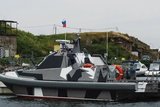
The Deep Shadow Swimmer Delivery Vehicle launched at Euronaval in 2018. (Photo: CABI Cattaneo)
A new integration package is being offered that will allow ships and underwater vehicles operate together seamlessly.


Italian shipbuilder Fincantieri and CABI Cattaneo, which designs and builds underwater vehicles for the Italian Navy’s COMSUBIN Special Forces have signed a Memorandum of Understanding (MoU).
The agreement, signed on 3 August, will see the companies investigate the possibility of closer cooperation for commercial and industrial opportunities that can be gained through the improved integration of underwater vehicles with larger naval units.
In its announcement of the MoU, Fincantieri stated that a further collaboration agreement would be signed within the year to make it possible for CABI underwater vehicles to be integrated with the shipbuilder’s main surface and sub-surface platforms.
Related Articles
Fincantieri commissioned for third Italian U212 NFS submarine
Italy signs €925 million contract for new class of OPVs
Saab’s C718 expeditionary submarine offered for Dutch Navy’s sea denial capability
It is expected that an improved level of integration between these platforms will allow a unique offering in global naval markets. Fincanteiri stated that it would be the design authority, responsible for the construction, fitting out and set-to-work of the larger platforms with CABI responsible for the underwater vehicles.
The intention is to develop for the international market a single integration package that can be implemented for customers of the company products allowing early integration at the design stage of construction.


More from Naval Warfare
-
![South Korea, Japan and Turkey vie for US shipbuilding access in future frigate contest]()
South Korea, Japan and Turkey vie for US shipbuilding access in future frigate contest
Washington’s search for a foreign-built frigate could hand South Korea, Japan and Turkey a larger prize than a double-hull order: a foothold inside the US shipbuilding industrial base.
-
![Japan’s FY2027 budget bets on stand-off systems to offset demographic decline]()
Japan’s FY2027 budget bets on stand-off systems to offset demographic decline
Japan’s FY2027 defence budget backs stand-off strike, a 17-aircraft MQ-9B buy and a declared bid to lead the world in uncrewed maritime assets, alongside new frigates, submarines and support ships.
-
![Russia’s uncrewed boat portfolio hints at future naval demand]()
Russia’s uncrewed boat portfolio hints at future naval demand
Ukrainian intelligence has catalogued more than 20 Russian uncrewed surface vessels, revealing a portfolio weighted towards mine warfare and logistics, with implications for Western naval investment.