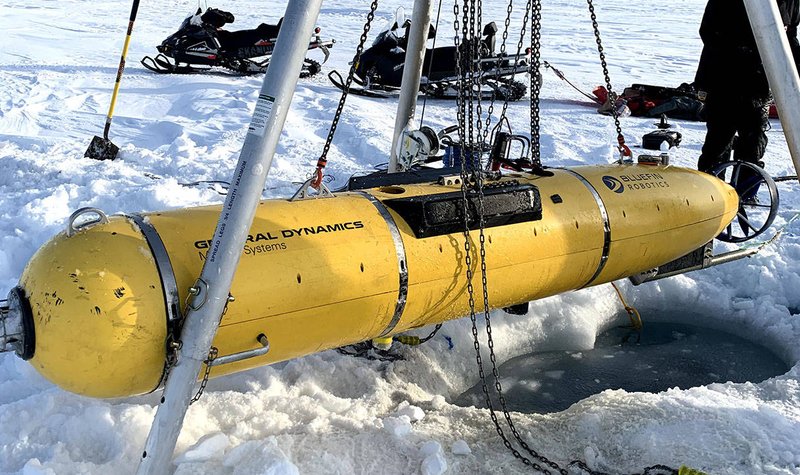
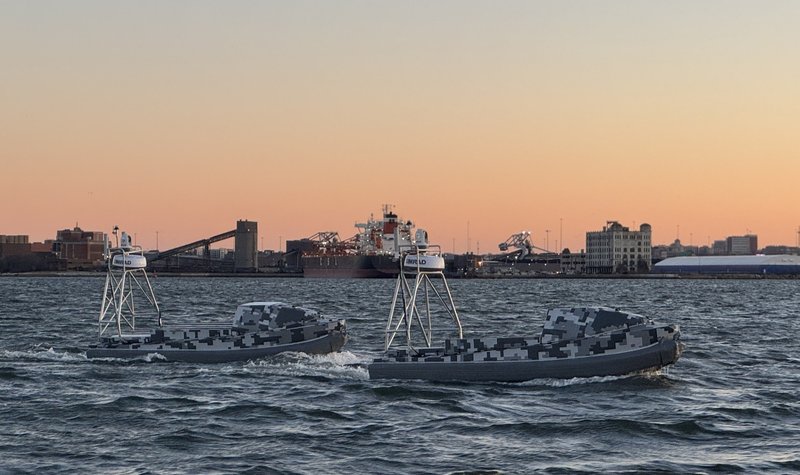
The changing Arctic environment is creating new challenges for submarine detection, driving demand for distributed sensors, uncrewed underwater vehicles and real-time acoustic modelling.
A wave of acquisitions is bringing specialist autonomy and underwater technology under the umbrella of larger defence contractors. As a result, navies may gain faster access to capability, but not necessarily a broader choice of suppliers.
The Armed Forces of the Philippines stood up a new integrated joint command, called the AFP Special Operations Command (AFPSOCOM), on 6 April. Putting them …
General Electric has wrapped up acoustic and weight comparison testing on its new, lighter weight composite module slated enclose the USS Arleigh Burke DDG 51 …
A Taiwanese navy flotilla docked in Nicaragua on 9 April in a high-profile visit highlighting ties with Central America and the Caribbean that are shrinking …
Babcock has floated the future LÉ George Bernard Shaw, the fourth offshore patrol vessel (OPV) for the Irish Naval Service, the company announced on 6 …
The US Navy is ploughing ahead with development of an Advanced Anti-Radiation Guided Missile—Extended Range (AARGM-ER) missile and rocket motor source selection is underway. During a …
OIP Sensor Systems (OIP) has signed a teaming agreement with Hydroid to jointly compete for the Belgian Ministry of Defence's Toolbox mine countermeasures (MCM) programme, …
MBDA and Lockheed Martin have completed qualification of MBDA’s Common Anti-air Modular Missile (CAMM) from Lockheed Martin’s Extensible Launching System (ExLS) 3-cell standalone launcher following …
Washington has agreed to allow US defence contractors help Taiwan construct its own submarines, Taipei said, welcoming the breakthrough in long-standing ambitions to build up …