


Iranian threat puts Bahrain’s air defence capabilities under scrutiny
With significant foreign military facilities to protect, Bahrain could face pressure to strengthen its short-range air defences.


It is quite incredible how much difficulty the Indian Army is having in obtaining new small arms to replace the likes of the INSAS assault rifle, with current requirements for close-quarter battle (CQB) carbines, assault rifles and light machine guns all currently on the go.
A contract for nearly 93,895 CQB carbines is expected soon as the army fast-tracks one of these aforementioned requirements. This is expected to be awarded to Caracal, with the UAE-based company’s 5.56mm CAR 816 rifle being down-selected last year to replace in-service Sterling 9mm submachine guns.
Caracal will be required to produce all the carbines
Our news & analysis is now part of Defence Insight®
A Basic-level or higher Defence Insight subscription is now required to view this content.

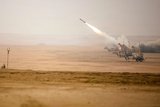
With significant foreign military facilities to protect, Bahrain could face pressure to strengthen its short-range air defences.
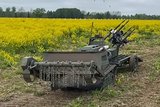
Uncrewed ground vehicles have been put on show featuring weapons ranging from machine guns to rockets since the turn of century, but the Russo-Ukrainian War has seen them take to the battlefield. At the same time, the US Marine Corps coastal defence system is heading for full rate production.
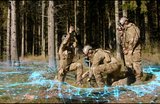
Saab's Automated After-Action Review turns complex training data into actionable insights, accelerating learning and building readiness.

The National Advanced Surface-to-Air Missile System (NASAMS) is in service on five continents with more than 120 platforms delivered. The system will now form part of Belgium’s Blue Dome air defence system alongside new orders for Skyranger air defence and Thales radar systems.

Poland’s potential €53 billion land procurement pipeline could give it one of Europe’s largest armoured vehicle fleets, with local production, technology transfer and future exports central to the strategy.

Western armies continue to test uncrewed ground vehicles, but wider procurement will depend on turning ambitions for autonomy into defined operational roles and funded requirements.

Connect with us on socials


