US greenlights sale of Javelin Lightweight Command Launch Units to the UK
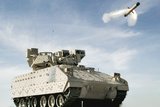
The Javelin Lightweight Command Launch Unit allows it to be used for standalone ISR. (Photo: Raytheon)
The US State Department has approved the possible Foreign Military Sale (FMS) of Javelin Lightweight Command Launch Units (LWCLUs) to the UK worth up to $300m.


The package approved by the US covers the purchase of 513 Javelin LWCLUs, associated electronics, training units, and support.
In its FMS approval notice, the US said the sale would support the US’s foreign policy and national security objectives by improving the security of a NATO ally. The prime contractor for the sale would be the Javelin Joint Venture (JJV), a partnership between Lockheed Martin and Raytheon.
The Javelin LWCLU weighs 30% less than the existing command launch unit and offers twice the night-time range and three times the daytime range.
The shoulder-fired anti-armour Javelin ATGM engages targets such as MBTs using an arched top-attack profile to strike weak points in armour.
Western allies have donated significant numbers of the systems to Ukraine to aid its defence against the ongoing Russian invasion.
With large numbers of Javelin ATGMs flowing into Ukraine, western allies are looking to backfill their weapon stocks.
At Farnborough International Air show, Lockheed Martin officials told Shephard the company was looking to increase the production of Javelin missiles from 2,100 units a year to over 4,000.
Related Equipment in Defence Insight

You may also like


More from Land Warfare
-
![Coming to America: companies look to tap into US with multi-domestic strategy]()
Coming to America: companies look to tap into US with multi-domestic strategy
Non-US companies are increasingly looking to establish subsidiary and partnerships to access the potential billions of dollars of vehicle and land systems contracts and there has already been some success.
-
![Front-line support: how UK industry is helping tackle Ukraine’s landmine challenges]()
Front-line support: how UK industry is helping tackle Ukraine’s landmine challenges
Pearson Engineering has provided equipment and engineering expertise to the Armed Forces of Ukraine since the beginning of the full-scale Russian invasion in 2022. The British company is now working to deepen engagement with the Ukrainian defence industry, expanding its support for the country’s population and laying the foundations for future technological innovation.
-
![AUSA 2026: companies adapt munitions and missiles for greater effect at lower costs]()
AUSA 2026: companies adapt munitions and missiles for greater effect at lower costs
Rather than developing entirely new weapons, defence companies are looking to build on existing weapons and systems to deliver greater capability, control costs and accelerate fielding.
-
![AUSA 2026: industry looks to make commercial platforms a military reality]()
AUSA 2026: industry looks to make commercial platforms a military reality
With a production rate of more than 10 million vehicles annually, the US commercial car and vehicle manufacturing base is second only to China. Defence companies are looking at how the vehicles, technology and manufacturing capability can support programmes.
-
![With changing patterns in Middle Eastern procurement, is Europe missing out?]()
With changing patterns in Middle Eastern procurement, is Europe missing out?
Traditional suppliers are struggling to meet the Middle East’s armoured vehicle modernisation needs, creating opportunities for South Korean manufacturers and regional defence industries.
-
![AUSA 2026: CUAS market expands as suppliers target new threats and operational requirements]()
AUSA 2026: CUAS market expands as suppliers target new threats and operational requirements
New developments from MARSS, MyDefence, Mountain Horse Solutions and Rafael suggest that future counter-drone protection will increasingly depend on combining advanced detection, rapid interception and integrated defensive networks.