Swiss Army still awaits new artillery contract to replace M109 howitzers
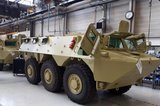
Piranha IV 10x10 fitted with Artillery Gun Module undergoing road trials in Switzerland with muzzle velocity radar mounted above rear of 155mm/52-calibre ordnance. (Photo: Swiss Army)
More than a year after selecting the KNDS Artillery Gun Module mounted on the Piranha IV 8x8 as its next artillery system, Switzerland is still awaiting the contract that will deliver the guns.


The Swiss Army is still awaiting a date as to when a contract will be placed with various contractors at home and abroad to replace its currently deployed M109 155mm/47-calibre tracked self-propelled (SP) artillery systems.
The winner of its competition to replace its existing howitzers was announced by the Swiss Army in late 2024, as the German KNDS Artillery Gun Module (AGM) integrated onto the locally produced General Dynamics European Land Systems (GDELS) Mowag Piranha IV 8x8 vehicle.
The Swiss Parliament gave the green light at the end of last year for the procurement of just 32 systems plus logistics vehicles and
Our news & analysis is now part of Defence Insight®
A Basic-level or higher Defence Insight subscription is now required to view this content.


More from Land Warfare
-
![With changing patterns in Middle Eastern procurement, is Europe missing out?]()
With changing patterns in Middle Eastern procurement, is Europe missing out?
Traditional suppliers are struggling to meet the Middle East’s armoured vehicle modernisation needs, creating opportunities for South Korean manufacturers and regional defence industries.
-
![AUSA 2026: CUAS market expands as suppliers target new threats and operational requirements]()
AUSA 2026: CUAS market expands as suppliers target new threats and operational requirements
New developments from MARSS, MyDefence, Mountain Horse Solutions and Rafael suggest that future counter-drone protection will increasingly depend on combining advanced detection, rapid interception and integrated defensive networks.
-
![US Army seeks CAML-Lite autonomous launcher prototypes for 2027 live-fire trials]()
US Army seeks CAML-Lite autonomous launcher prototypes for 2027 live-fire trials
The optionally crewed, C-130-transportable platforms would combine modular offensive and defensive fires with autonomous resupply, with demonstrations planned for Talisman Sabre 2027.