Localisation is the aim of the game in defence procurement
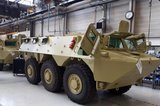
Hungary received its first locally built KF41 Lynx in 2024. (Photo: Rheinmetall)
Defence buyers globally are increasingly looking to tie domestic manufacturing and technology transfer into deals.


A growing trend in defence procurement is the desire of governments to localise as much of the production process as possible. In the past, local production was treated as an optional extra; nice to have but not essential. Now it is increasingly becoming crucial in order for a deal to be agreed.
This can be seen in Europe, where multiple governments have insisted on local production as a condition of a sale. Hungary has been at the forefront of the shifting focus, signing deals with both Rheinmetall and Nurol Makina to localise production of the KF41 Lynx and Ejder Yalcin,
Our news & analysis is now part of Defence Insight®
A Basic-level or higher Defence Insight subscription is now required to view this content.


More from Land Warfare
-
![AUSA 2026: industry looks to make commercial platforms a military reality]()
AUSA 2026: industry looks to make commercial platforms a military reality
With a production rate of more than 10 million vehicles annually, the US commercial car and vehicle manufacturing base is second only to China. Defence companies are looking at how the vehicles, technology and manufacturing capability can support programmes.
-
![With changing patterns in Middle Eastern procurement, is Europe missing out?]()
With changing patterns in Middle Eastern procurement, is Europe missing out?
Traditional suppliers are struggling to meet the Middle East’s armoured vehicle modernisation needs, creating opportunities for South Korean manufacturers and regional defence industries.
-
![AUSA 2026: CUAS market expands as suppliers target new threats and operational requirements]()
AUSA 2026: CUAS market expands as suppliers target new threats and operational requirements
New developments from MARSS, MyDefence, Mountain Horse Solutions and Rafael suggest that future counter-drone protection will increasingly depend on combining advanced detection, rapid interception and integrated defensive networks.