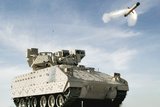
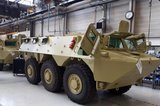
Why Middle Eastern markets demand bespoke AFV solutions
The Leclerc MBTs operated by the UAE have a host of enhancements compared to the French Army’s own fleet. This example is fitted with a new panoramic sighting system. (Photo: author)
In this expert analysis, Christopher Foss looks at how armoured vehicle suppliers to the Middle East are increasingly tailoring platforms for the region’s specific operational requirements.


The Middle East’s climatic challenges along with its deep-pocketed customers prepared to spend what is necessary to meet specific operational needs mean that Western and other OEMs targeting this market need more than an off-the-shelf offering to secure contracts.
While there is a clear trend in Middle Eastern countries to design, develop and manufacture their own fleets of armoured fighting vehicles (AFVs), especially wheeled platforms, many armed forces in the region still rely on foreign models to meet their own specific operational requirements.
A fair proportion of these were designed for operations in Europe rather than the Middle East, with its
Our news & analysis is now part of Defence Insight®
A Basic-level or higher Defence Insight subscription is now required to view this content.

More from Land Warfare
-
![AUSA 2026: companies adapt munitions and missiles for greater effect at lower costs]()
AUSA 2026: companies adapt munitions and missiles for greater effect at lower costs
Rather than developing entirely new weapons, defence companies are looking to build on existing weapons and systems to deliver greater capability, control costs and accelerate fielding.
-
![With changing patterns in Middle Eastern procurement, is Europe missing out?]()
With changing patterns in Middle Eastern procurement, is Europe missing out?
Traditional suppliers are struggling to meet the Middle East’s armoured vehicle modernisation needs, creating opportunities for South Korean manufacturers and regional defence industries.
-
![AUSA 2026: CUAS market expands as suppliers target new threats and operational requirements]()
AUSA 2026: CUAS market expands as suppliers target new threats and operational requirements
New developments from MARSS, MyDefence, Mountain Horse Solutions and Rafael suggest that future counter-drone protection will increasingly depend on combining advanced detection, rapid interception and integrated defensive networks.