Serbia pushes new and improved weapons to showcase native capabilities
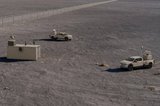
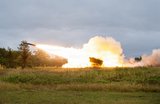
Serbian HSPM with one of the 203mm HE projectiles in the foreground. (Photo: author)
Last month’s Partner 2025 exhibition in Belgrade, Serbia was seen as a chance for local companies to grab the spotlight. New systems, anti-tank weapons and turrets were displayed as well as programme progress updates.


In the past, Serbia had a substantial military industrial base as part of the former Yugoslavia, which distanced itself from the Cold War and created a notable local manufacturing capability.
Following the break-up of Yugoslavia, the smaller constituent countries have looked for how to leverage their industrial productivity.
At Partner 2025 in late September, Serbia showed the path it was following with a focus on improving existing weapons and platforms as well as developing new products yet to be introduced into service.
One new platform on display at the exhibition was the Nova anti-tank guided weapon (ATGW) developed by Yugoimport. Officials at
Our news & analysis is now part of Defence Insight®
A Basic-level or higher Defence Insight subscription is now required to view this content.


More from Land Warfare
-
![AUSA 2026: CUAS market expands as suppliers target new threats and operational requirements]()
AUSA 2026: CUAS market expands as suppliers target new threats and operational requirements
New developments from MARSS, MyDefence, Mountain Horse Solutions and Rafael suggest that future counter-drone protection will increasingly depend on combining advanced detection, rapid interception and integrated defensive networks.
-
![US Army seeks CAML-Lite autonomous launcher prototypes for 2027 live-fire trials]()
US Army seeks CAML-Lite autonomous launcher prototypes for 2027 live-fire trials
The optionally crewed, C-130-transportable platforms would combine modular offensive and defensive fires with autonomous resupply, with demonstrations planned for Talisman Sabre 2027.
-
![Integrated approach: transforming vehicle communications for a new era of warfare]()
Integrated approach: transforming vehicle communications for a new era of warfare
In the modern battlespace, military intercom systems can no longer operate in isolation. They must instead be integrated with the wider tactical network, gaining operational advantages through secure communications with dismounted soliders and other assets across domains.