Leonardo and Rheinmetall join forces to build new tanks
The Rheinmetall KF51 Panther is understood to be used as the basis for the new Italian main battle tank (Photo: Rheinmetall)
The 50:50 joint venture, which will have legal headquarters in Rome and operational headquarters in La Spezia, is expected to be established in the first quarter of 2025 and will initially aim to equip the Italian Armed Forces with combat vehicles.


Italy’s Leonardo and Germany’s Rheinmetall have officially joined forces in a venture that aims to consolidate the European defence sector and develop military combat vehicles in Europe.
Both companies will be equal shareholders in the new company – named Leonardo Rheinmetall Military Vehicles (LRMV) – with headquarters in Rome and La Spezia. The establishment of the company is expected by the first quarter of 2025, pending regulatory approval, with 60 percent of the work to be carried out in Italy.
This agreement is a consolidation of the memorandum of understanding (MoU) that was signed in July 2024 between the two companies. The initial focus of the joint venture, according to LRMV, will be on the Italian defence market – specifically the development and commercialisation of a new Italian main battle tank (MBT) to replace the Ariete and new Lynx platform for the Armoured Infantry Combat Systems (AICS) programme.
Related Articles
Italy weighs up the challenge of its tank replacement plans
Italy picks Rheinmetall and Leonardo for MBT and IFV and gives MGCS a boost
Armin Papperger, CEO of Rheinmetall AG said: “[LMRV] are creating a new heavyweight in European tank production. Leonardo and Rheinmetall, two leading European suppliers of defence technology, are joining forces to carry out ambitious projects”.
Roberto Cingolani, CEO of Leonardo, commented that the joint venture marked a “significant step towards the creation of a European defense system based on specialised shared platforms” – one that both partners expect to compete at and sell in international markets.
While the Italian market would be the initial focus, Papperger also added that the company would be targeting “other partner nations which are in need of modernising their combat systems in the future”.
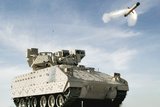
According to both companies, Rheinmetall’s KF51 Panther will form the basis for the new battle tank to replace the Ariete. Its KF41 Lynx infantry fighting vehicle will also form the technological basis for the AICS.
Shephard Defence Insight has noted that the Italian MoD is understood to want to begin procuring vehicles in 2025, with the AICS project funded up until 2035.
Related Programmes in Defence Insight


More from Land Warfare
-
![AUSA 2026: companies adapt munitions and missiles for greater effect at lower costs]()
AUSA 2026: companies adapt munitions and missiles for greater effect at lower costs
Rather than developing entirely new weapons, defence companies are looking to build on existing weapons and systems to deliver greater capability, control costs and accelerate fielding.
-
![With changing patterns in Middle Eastern procurement, is Europe missing out?]()
With changing patterns in Middle Eastern procurement, is Europe missing out?
Traditional suppliers are struggling to meet the Middle East’s armoured vehicle modernisation needs, creating opportunities for South Korean manufacturers and regional defence industries.
-
![AUSA 2026: CUAS market expands as suppliers target new threats and operational requirements]()
AUSA 2026: CUAS market expands as suppliers target new threats and operational requirements
New developments from MARSS, MyDefence, Mountain Horse Solutions and Rafael suggest that future counter-drone protection will increasingly depend on combining advanced detection, rapid interception and integrated defensive networks.