Will we see a rise in MBT alternatives in future armoured warfare?
The Type 100 Light Tank recently unveiled by China. (Photo: Chinese state television)
In recent years, there has been an increase in the number of militaries procuring alternative vehicles to the traditional tank. The spread of these vehicles appears to be driven by the ever-increasing cost of MBTs and the changing nature of the modern battlefield.


Since Russia’s full-scale invasion of Ukraine, there has been significant debate on the role of the main battle tank (MBT) in modern warfare. MBT detractors claim that heavy armour has been rendered obsolete by the proliferation of new threats like first-person view (FPV) uncrewed aerial systems (UAS) and loitering munitions.
These new threats are exceedingly cheap, while MBTs are increasingly expensive. The Leopard 2A8, recently unveiled by KNDS, costs an estimated US$16 million, while drones like the GA-10FPV-AI, which have been so effective in Ukraine, cost an estimated $850. The MBT’s defenders, meanwhile, maintain that nothing provides the same level of direct fire support and survivability as the MBT.
While that debate has been quite high profile, less attention has been paid to the militaries around the world that have been opting for MBT alternatives. In recent years, there has been an increase in companies integrating larger-calibre cannons onto lighter wheeled and tracked chassis. This has the benefit of offering vehicles that combine an MBT’s firepower with the mobility of an infantry fighting vehicle (IFV) or armoured personnel carrier (APC).
Related Articles
Europe looks to solve tank procurement challenges with upgraded and new platforms
New Type 100 AFVs help China leapfrog ahead of other Western concepts
There are two main reasons why a country may opt for an alternative to an MBT. The first is financial. As mentioned before, MBTs are becoming increasingly expensive, to the point where even larger economies are struggling to sustain large quantities of them. The UK’s and France’s shrinking MBT fleets are a prime example. It is no surprise, therefore, that some governments, with less resources at their disposal, may choose to procure an alternative.
A recent example here is Slovakia. The Slovak Army is currently undertaking a programme to replace its small fleet of T-72s, which were left over from the Cold War. The original competitors were the Leopard 2A8, the KF51 Panther and the K2 Black Panther. The K2 was initially the frontrunner, owing to its lower overall cost while still providing a proven and effective platform.
However, in September 2025, the Slovakian government made a surprise announcement, revealing that Slovakia was no longer considering any of these platforms and would instead choose between BAE Systems’ CV90120-T and Otokar’s Tulpar Light Tank. Both vehicles integrate a 120mm cannon with an IFV chassis, consequently making them cheaper and less technically demanding than traditional MBTs. Indeed, Slovakia’s stated reason for selecting between them is that they are more affordable and easier to produce, creating the possibility of localised production.
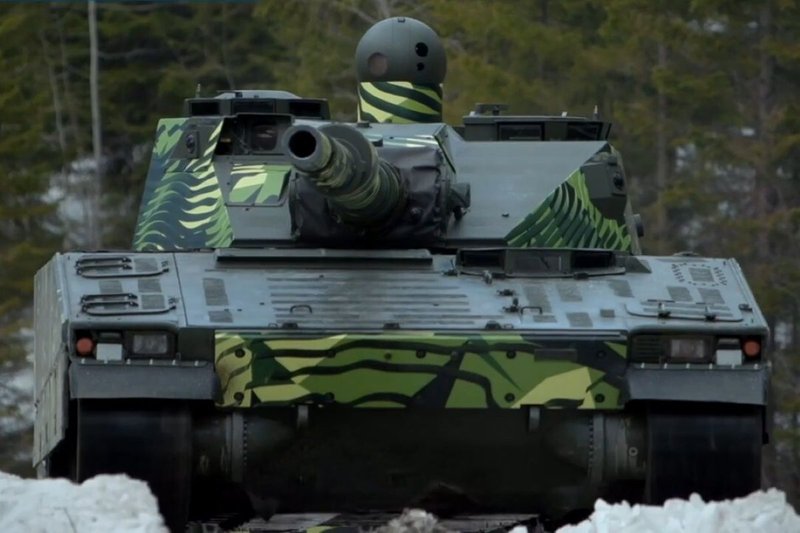
Given the high rate of MBT attrition suffered by both Russia and Ukraine since 2022, it is entirely plausible that more governments may opt for cheaper platforms to retain sufficient mass in their armoured forces.
The second reason why a country may opt for an MBT alternative is capability. Another caveat of modern MBTs is their increasing complexity. As platforms incorporate more features like reactive armour and active protection systems (APS), their weight inherently increases. This limits the range of environments that MBTs can operate in. On the level plains of Eastern Europe, MBTs can operate very effectively. In other regions with more varied terrain, they will struggle.
This problem has caused a rising number of Indo-Pacific nations to look for alternatives. China has been leading this trend with the development of a range of new platforms that could function as MBT alternatives.
The two locations in which China is likely to fight a ground war are its Himalayan border with India, and Taiwan in the event of an invasion. Neither scenario is conducive to traditional MBT operations. The Indian border, comprising numerous narrow passages and ravines, is liable to inflict prohibitive casualties on MBTs before contact with the enemy is even made.
An amphibious invasion of Taiwan would require light vehicles capable of being deployed by landing assault craft. Traditional MBTs would be too heavy for this role and would likely suffer significant casualties. Those that survived would then have to contend with Taiwan’s dense urban environments, where smaller vehicles would have an advantage.
Consequently, in 2018, the People’s Liberation Army (PLA) unveiled the ZTL-11 assault gun, an 8×8 armed with a 105mm cannon and based on the chassis of the ZBL-09 IFV. This was followed in 2021 with the unveiling of the VN22B, a variant of the VN22B 6x6 IFV, again armed with a 105mm cannon. Earlier this year, at China’s annual Victory Day Parade, the PLA debuted two new platforms: the Type 100 Light Tank and the Next Generation Airborne Combat Vehicle.
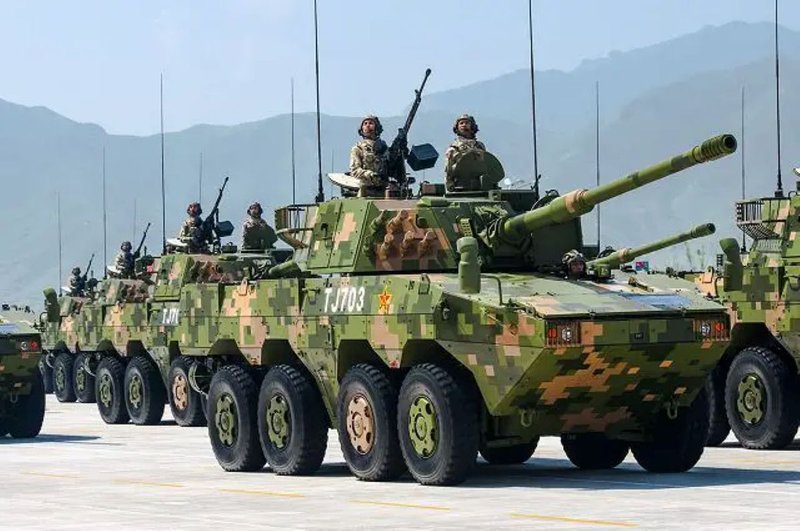
These four platforms provide China with a significantly higher degree of flexibility than traditional MBTs. The ZTL-11 and the VN22B, being wheeled, are both lighter and faster than many MBTs, allowing them to support infantry in terrain where heavier MBTs cannot operate. The ZTL-11 is also believed to be amphibious, which would allow it to function as part of the first wave in the event of an invasion of Taiwan.
The Next Generation Airborne Combat Vehicle is intended to provide the PLA’s airborne troops with armoured fire support. Being both air transportable and equipped with a 120mm cannon, it could be rapidly deployed to distant battlefronts to support troops in a way that MBTs cannot.
The new Type 100 Light Tank is particularly interesting in this regard. Sharing a chassis with the new Type-100 Fire Support Platform, it foregoes traditional heavy armour and instead relies upon advanced APS and manoeuvrability to combat most threats. It is also designed to be networked with the Type 100 Fire Support Vehicle, allowing the two platforms to support each other, with each countering different threats. This is in many ways a simpler version of what France and Germany have been attempting to achieve with their Main Ground Combat System (MGCS).
Being light enough to be deployed by amphibious assault craft, the Type 100 could form part of an invasion of Taiwan, following in the wake of the ZTL-11. It would also be light enough to operate in the narrow confines of the Himalayas. This would allow the Type 100 to engage vehicles like the Zorawar, a comparable platform currently being developed by India, specifically for high-altitude operations.
China’s neighbours have not been oblivious to this trend and have begun developing their own MBT alternatives. Taiwan, for instance, is currently developing the D3 Cheetah, which it describes as a “wheeled tank”. Armed with a 105mm cannon, the D3 is intended to operate in dense urban environments, where its greater manoeuvrability is intended to allow it to outmanoeuvre slower armoured elements.
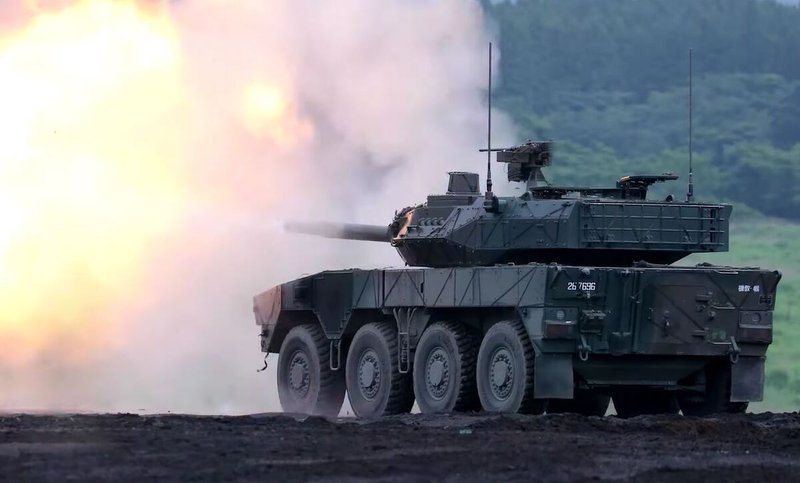
Japan has also been adapting to this trend with the introduction of the Type 16 Manoeuvre Combat Vehicle (MCV). The Type-16 MCV is a 6×6 armed with a 105mm cannon and is intended to replace Japan’s Type-74 MBTs. At 12t lighter and 40km/h faster than the Type-74, it is designed to rapidly deploy across Japan’s many islands and neutralise amphibious and air-deployed vehicles. While a 105mm cannon may struggle to combat a modern MBT head-on, it will be more than sufficient to combat the lighter IFV-based MBT alternatives that China has been developing.
Japan has also begun locally producing the Patria AMVxp, under its Improved Wheeled Armoured Personnel Carrier programme. While it is currently producing the AMVxp in its APC configuration, the AMVxp family also includes a variant armed with a 120mm cannon. It is not inconceivable that Japan could also start producing this variant in the future.
Given these developments, it is clear that we are seeing the increasing use of MBT alternatives. As the nature of both warfare and MBTs change, these alternatives seem likely to proliferate. While the MBT is not obsolete, there are a growing number of situations in which modern MBTs are not effective. It is likely that future conflicts will see both MBTs and MBT alternatives operating alongside each other to complement the other’s strengths.
Related Programmes in Defence Insight
Type 16 Mobile Combat Vehicle [Japan]
Improved Wheeled Armoured Personnel Carrier [Japan]
Related Equipment in Defence Insight


More from Land Warfare
-
![AUSA 2026: Hanwha receives howitzer top-up order to meet US Army’s fast delivery demand]()
AUSA 2026: Hanwha receives howitzer top-up order to meet US Army’s fast delivery demand
Less than two months after winning a contract from the US Army for six prototype K9 mobile howitzers, Hanwha Defense USA has received an order for another three. The company will show a platform at AUSA 2026.
-
![KNDS points RCH 155 towards longer-range artillery future]()
KNDS points RCH 155 towards longer-range artillery future
KNDS Deutschland has fitted a tracked RCH 155 with a new KNDS France 155mm/58cal ordnance, opening a potential path towards significantly longer-range artillery and a future beyond the current NATO standard.
-
![Companies downselected for British Army vehicle programme]()
Companies downselected for British Army vehicle programme
It is believed that three companies did not make the downselect but a dark horse in Spain’s Iturri is believed to have got through.