


Canada accelerates uncrewed aerial system procurement for NATO and Arctic forces
Canada plans to acquire at least 120 uncrewed aerial systems through two competitions with combined funding ceilings of C$32 million.


Estonia is evaluation sniper rifles from four manufacturers. (Photo: ECDI)
The Estonian Centre for Defence Investment (ECDI) has announced a tender for procurement of sniper weapons for the Estonian Defence Forces and the Defence League, with test firings carried out on 7 March to assess the technical suitability of the weapons.
The test firing will determine accuracy and reliability of the weapon, optical sight and other accessories.
The weapons being tested are from Sako, Haenel, Unique Alpine and Desert Tech and include accessories selected by the tenderers and fitted on the weapons.
Seven contenders for Estonian medium-range air defence requirement
Ukraine conflict prompts precision strike and artillery shift in the Baltics
Japan selects new sniper rifles and machine guns
Each bidder has assembled a proposed system with freely selected accessories and equipment in compliance with the requirements of the ECDI.
Major Risto Pärtel, chief weapons officer of the Estonian Defence Forces, said: ‘Using the new rifles, it [sniper missions] can be done at any time of the day, as the weapons are equipped with state-of-the-art equipment like silencers and thermal weapon sights. In addition to high accuracy, the weapons must also be robust and as compact and light as possible.’
The selected rifle will replace the current Sako TRG-42 in service and must be accurate over distances of up to 1,500m.
Evaluation criteria include cost of the rifle and accessories, weight and length, barrel life and the cost of spare parts.
Once test firings are complete and results have been evaluated, a contract will be awarded to the successful company in Q2 2023. The expected delivery date for the new sniper weapons is 2024.


Canada plans to acquire at least 120 uncrewed aerial systems through two competitions with combined funding ceilings of C$32 million.
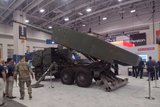
New counter-drone technologies, autonomous launchers and manufacturing modernisation initiatives highlighted emerging opportunities for defence suppliers, while the UK advanced a major military vehicle procurement programme.

Non-US companies are increasingly looking to establish subsidiary and partnerships to access the potential billions of dollars of vehicle and land systems contracts and there has already been some success.

Pearson Engineering has provided equipment and engineering expertise to the Armed Forces of Ukraine since the beginning of the full-scale Russian invasion in 2022. The British company is now working to deepen engagement with the Ukrainian defence industry, expanding its support for the country’s population and laying the foundations for future technological innovation.
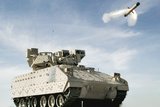
Rather than developing entirely new weapons, defence companies are looking to build on existing weapons and systems to deliver greater capability, control costs and accelerate fielding.

With a production rate of more than 10 million vehicles annually, the US commercial car and vehicle manufacturing base is second only to China. Defence companies are looking at how the vehicles, technology and manufacturing capability can support programmes.

Connect with us on socials


