BAE Systems receives $120 million for more Armoured Multi-Purpose Vehicles
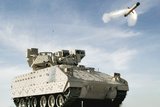
BAE Systems is producing five types of the AMPV, including the medevac variant. (Photo: BAE Systems)
BAE Systems has received an LRIP contract award of $119.6 million for additional Armoured Multi-Purpose Vehicles (AMPVs) for the US Army as it awaits full-rate production (FRP) contract awards for a fleet predicted to eventually be 2,897 vehicles.


With each vehicle stated by Shephard Defence Insight to cost $2.8 million the number of vehicles under the contract is expected to be 42 and manufacture is programmed to be completed in Q1 of 2026.
It had been hoped that FRP awards would be placed in early 2023 after initial operational tests of the AMPV with the 3rd Infantry Division at Fort Stewart in Georgia completed last year.
The AMPV programme includes five variants: general purpose, medical treatment, medevac, mission command and mortar carrier and is designed to replace ageing M113 APCs in service with US Army Armored Brigade Combat Teams.
Related Articles
US Army’s AMPV enters LRIP phase
AUSA 2022: BAE Systems awaits AMPV full-rate production award in Q1 2023
The design of the AMPV is derived from the hull of the Bradley Fighting Vehicle with modifications to increase its internal volume and improve its resistance to mine blasts.
The US Army plans to procure 2,897 AMPVs as follows: 522 general purpose, 216 medical treatment, 790 medical evacuation, 993 mission command and 386 mortar carrier.
BAE Systems received the first $575 million LRIP agreement in February 2019, when the US Army placed an order for 297 AMPVs. A second $400.91 million deal for an additional 160 AMPVs was announced by the DoD in January 2020.
In October 2022, Bill Sheehy, AMPV programme director at BAE Systems, explained that the company has already delivered more than 160 vehicles under two contracts to supply 457 platforms.
Related Programmes in Defence Insight
Related Equipment in Defence Insight


More from Land Warfare
-
![AUSA 2026: companies adapt munitions and missiles for greater effect at lower costs]()
AUSA 2026: companies adapt munitions and missiles for greater effect at lower costs
Rather than developing entirely new weapons, defence companies are looking to build on existing weapons and systems to deliver greater capability, control costs and accelerate fielding.
-
![With changing patterns in Middle Eastern procurement, is Europe missing out?]()
With changing patterns in Middle Eastern procurement, is Europe missing out?
Traditional suppliers are struggling to meet the Middle East’s armoured vehicle modernisation needs, creating opportunities for South Korean manufacturers and regional defence industries.
-
![AUSA 2026: CUAS market expands as suppliers target new threats and operational requirements]()
AUSA 2026: CUAS market expands as suppliers target new threats and operational requirements
New developments from MARSS, MyDefence, Mountain Horse Solutions and Rafael suggest that future counter-drone protection will increasingly depend on combining advanced detection, rapid interception and integrated defensive networks.