Why we need to radically rethink how we plan for a future of unprecedented technological change (Opinion)
Guard of honour greet a British delegation upon arrival at Japan's MoD Headquarters in Tokyo.
Technological advances are revolutionising defence, outpacing our outdated political and procurement systems. Fujitsu’s Keith Dear argues that we need a radical rethink, adopting a ‘theory of winning’ to pre-emptively develop essential technologies and seize opportunities, ensuring security and stability in an unpredictable world.


Brought to you in partnership with Fujitsu
In an era where technological advancements rapidly reshape the landscape of global security, Japan and the UK are vital partners.
Shared values, democracy, and adherence to the rule of law are foundational to the UK and Japan’s burgeoning partnership. Today, technology is vital to protecting those values and our systems while also posing profound challenges to them – social, political, economic, and military. As global partners, the UK and Japan will need a paradigm shift in how we incorporate technological advancements into our defence posture.
The pace of technological advancement is rapidly overtaking the pace of our political discourse and defence procurement cycles. Our efforts to integrate new technology and develop doctrines that harness it are ponderous and slow. We have this the wrong way around. Instead of catching up to the commercial technology sector, our modern militaries should first establish a comprehensive ‘theory of winning’ to inform our technology procurement needs.
The essence of this approach requires understanding the operational challenges to be faced on future battlefields and developing technologies that to meet the threat – too much of our R&D is following, not leading. A shared plan for how we will fight should be the foundation of a modern military partnership and an important part, for the UK and Japan, of how we fulfil the collective vision of the Hiroshima Accord.
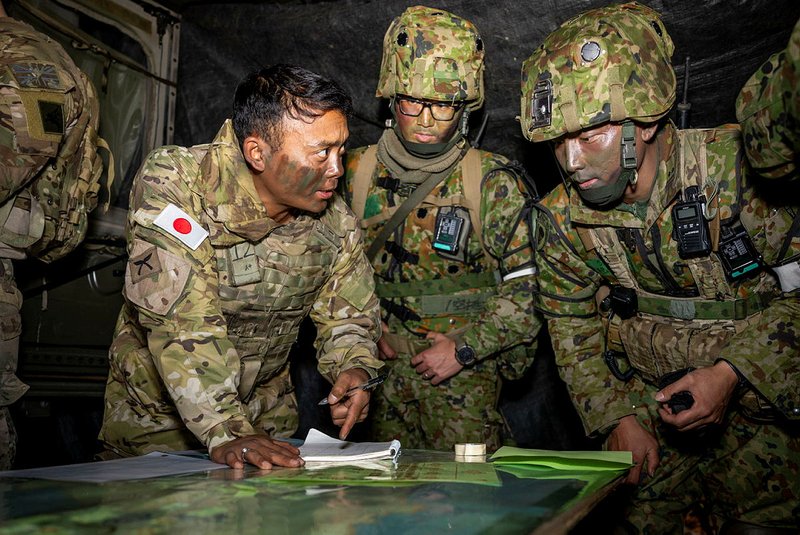
The McKinsey Global Institute estimates that compared to the late 18th and early 19th Century Industrial Revolution, change is now ten times faster, at 300 times the scale, with 3000 times the impact. Defence cannot keep up.
Neither spiral development nor faster procurement will be enough. My recommendations, a ‘Roper Rule’ (no programme over five years) and to ‘put your money where your strategy is’ (transfer 6% of the budget every year, by rule, to new capabilities) are necessary, but also not sufficient.
Establishing a comprehensive ‘theory of winning’ requires planning against constants, trends, and shifts; it requires imagination to anticipate, design, and build the technologies we need to win, rather than just agility in responding as technological change upends our plans again and again.
We need to start from square one, understanding the operational challenges in detail. All military revolutions have come from planning for specific conflicts, against a specific adversary, in a specific geography. Today’s will be no different.
Many technology firms have a limited understanding of how their systems are changing the character of warfare, while defence often finds itself reacting to breakthroughs, equally bewildered. We need to change this dynamic. A comprehensive theory of winning specific to anticipatable future conflict will need to be jointly developed.

The Hiroshima Accord, signed at the G7 Leaders Summit last year, commits the UK and Japan to ‘joint action’ and’ a consistent and shared response’ to address the ‘impact of rapid technological development’ and to advance ‘the vision of a free and open Indo-Pacific.’ To better guide the UK and Japan’s joint action, we need to think differently about the future of defence and, thus, of deterrence.
Technology is important, but it cannot be the guiding light. A theory of winning will be our best opportunity to harness the power of modern technology and deploy it effectively on the modern battlefield. It will see greater collaboration among global partners, strengthening our alliances and security apparatuses.
This is a blueprint for the future of defence, where strategic foresight and technological innovation go hand in hand. The theory of winning will ensure that our defence capabilities are not only advanced but also aligned with our ultimate objectives of security and stability in an unstable world.
Keith Dear is Managing Director of Fujitsu’s Centre for Cognitive and Advanced Technologies
To learn more, attend Keith Dear’s keynote address on Thursday, 25 July, at the Farnborough Airshow.
- 10:30 am on 25 July: The Theory of Winning: Transforming Defence with Technology that Does Not Exist

You may also like
More from Studio
-
![How Pearson Engineering combines tradition with innovation for the demining mission (Video)]()
How Pearson Engineering combines tradition with innovation for the demining mission (Video)
At Eurosatory 2026, Pearson Engineering's Group CEO Ian Bell talked about the company's role in delivering specialist armoured engineering, route-clearance and demining capabilities to military customers around the world.
-
![Ukraine experience forces rethink of counter-UAS doctrine]()
Ukraine experience forces rethink of counter-UAS doctrine
A panel session at Eurosatory 2026 brought together industry, academia and the French armed forces to assess how Ukraine’s battlefield reality is reshaping counter-UAS (CUAS) technology, air defence doctrine and Western procurement priorities.
-
![Networked advantage: keeping unmanned systems in the loop with battlefield radio technology]()
Networked advantage: keeping unmanned systems in the loop with battlefield radio technology
Unmanned systems are powerful intelligence, surveillance and reconnaissance (ISR) assets and communication tools, but are often isolated from wider networks, limiting their potential. Industry is now tackling this challenge, empowering UxVs to act as integrated nodes across domains.
-
![Air defence at scale: Europe’s challenge of cost, integration and sustainability]()
Air defence at scale: Europe’s challenge of cost, integration and sustainability
The evolution of aerial threats is driving renewed investment in ground-based air defence across Europe. Yet beyond capability, a more pressing challenge is emerging: how to sustain air defence at scale, as rising costs, limited stockpiles and industrial production constraints place increasing pressure on existing structures.
-
![The path to a safer future – why technological innovation is key to successful mine clearance]()
The path to a safer future – why technological innovation is key to successful mine clearance
Landmines continue to present a persistent and constantly evolving global threat, and advances in technology are improving how the challenges posed by minefields are managed, while reducing risks to human life. The growing capabilities of autonomous and robotic systems, coupled with advanced sensor capabilities, are now fuelling industry’s responses to this pervasive danger.
-
![“The challenge is not demand, but delivery”: why rapid building of industrial capability is key to Europe’s future defence]()
“The challenge is not demand, but delivery”: why rapid building of industrial capability is key to Europe’s future defence
In today’s complex security landscape, military requirements are rapidly evolving across all domains. As European defence spending rises, industry is under growing pressure to expand production capacity, strengthen supply chains and accelerate delivery timelines to meet operational demand.