AUSA 2021: Tactical intelligence triad to breathe new cyber life into BCTs
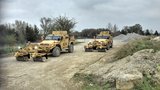
Soldiers in the 3rd Brigade Combat Team, 101st Airborne Division (Air Assault) on a training exercise in September 2021. (Photo: US Army/ Spc Jordy Harris)
Cyber has been a missing ingredient in US Army planning for Brigade Combat Teams, but change is in the air.


Brigade Combat Teams (BCTs) in the US Army are renowned for what they bring to the kinetic fight: namely, high-grade infantry, armour and artillery components and great expertise in employing them.
However, in cyberspace operations, SIGINT and EW they can appear as the poor relation, easily lost amidst the growing cyberwar family.
References to such technologies for the vaunted BCTs are sparse. For example, in a 2019 Congressional Research Service (CRS) report titled ‘Infantry Brigade Combat Team (IBCT) Mobility, Reconnaissance, and Firepower Programs’, the word ‘cyber’ appears just once.
The CRS analysis quoted a stark warning from GEN Mark Milley (then the US Army chief of staff, now chairman of the Joint Chiefs of Staff) that ‘the proliferation of effective long-range radars, air defense systems, long-range precision weapons, electronic warfare, and cyber capabilities enables adversary states to threaten our partners and allies’.
Soon afterwards, the Pentagon accelerated plans to bolster and better utilise BCTs in the electronic battlespace, including faster response times to threats.
The result was the announcement in September 2021 of advances in the Terrestrial Layer System - Brigade Combat Team (TLS-BCT) programme, and the award of a $9.6 million contract for Lockheed Martin to continue earlier work.
The follow-on award follows 16 months of prototyping by rival bidders Lockheed Martin and Boeing subsidiary Digital Receiver Technology.
At its developmental core, for now an array is mounted on a single TLS-equipped Strykercombat vehicle (a cornerstone of BCT operations).
When fielded, TLS will become the first integrated cyberwar operations, EW, and SIGINT platform used by the US Army.
The army plans to put TLS into operational service in 2022. If programme milestones are met, truck-mounted iterations (called TLS- Echelons Above Brigade) will follow in 2023.
According to the Program Executive Office - Intelligence Electronic Warfare & Sensors (PEO IEW&S) in the DoD, the ‘triple-play’ TLS yields overmatch capabilities for ground-based units. According to Programme Manager Ken Strayer, it will be assigned to multi-function platoons and the EW platoon that is embedded in a BCT’s military intelligence companies.
Troops at multiple echelons will gain ‘critical situational awareness of the enemy through detection, identification, location, exploitation, and disruption of enemy signals of interest’, PEO IEW&S argued.
Commanders, meantime, will have ‘electronic attack and offensive cyber warfare options to deny, degrade, disrupt, or manipulate enemy signals of interest and the targeted force’, it added.
The US Army has released no details of how the innovation may interact with other US or allied SIGINT, EW or cyber units. Nor has it outlined how TLS fits into the US Cyber Command hierarchy.
All the same, at the time of writing TLS prototyping continues along with integration and proof-of-concept planning.
Related Equipment in Defence Insight


More from AUSA 2021 News
-
![New ruggedised computer caters for extreme environments]()
New ruggedised computer caters for extreme environments
Sidewinder-Byte has a ruggedised modular/open architecture design compliant with MOSA standards and an unlimited deployment capability.
-
![AUSA 2021: Hanwha Defense eyes US market]()
AUSA 2021: Hanwha Defense eyes US market
South Korean firm Hanwha Defense is keen to team up with US suppliers as a means of accessing DoD procurement programmes.
-
![AUSA 2021: Ultra presents new RAIN information system]()
AUSA 2021: Ultra presents new RAIN information system
RAIN delivers faster information flow to troops and a beta version is set for release, says Ultra.
-
![AUSA 2021: UVision signs cooperation agreement to support HERO in US]()
AUSA 2021: UVision signs cooperation agreement to support HERO in US
UVision and MAG Aerospace will provide operational and training solutions for HERO Loitering Munitions.
-
![AUSA 2021: Raytheon lifts the veil on GhostEye MR]()
AUSA 2021: Raytheon lifts the veil on GhostEye MR
New radar uses LTAMDS technology developed for the US Army.
-
![AUSA 2021 - Curtiss-Wright introduces new open architecture solutions]()
AUSA 2021 - Curtiss-Wright introduces new open architecture solutions
Curtiss-Wright has developed systems that comply with US Army modular open standards.