US must probe if weapons went to Yemen militias, states general


The US must examine whether US-made military gear in Yemen is being transferred to unintended recipients, including Al-Qaeda and Iran-backed rebels, a top general said on 5 February 2019.
Gen Joseph Votel, who heads US Central Command covering the Middle East, expressed concern to senators about a CNN investigation that found weaponry and equipment provided by the US to Saudi Arabia and the UAE has ended up being used across war-torn Yemen by a number of militias.
‘We have to look more closely at the allegations in this particular situation to find out what happened,’ Votel told the Senate Armed Services Committee. ‘We will have to examine that better.’
Recipients of US defence equipment must agree not to re-export or transfer that gear without first getting US authorisation. According to CNN, the Washington-backed, Saudi-led coalition that is fighting the Houthi rebels in Yemen has transferred American-made weapons and military vehicles to Qaeda-linked fighters, hard-line Salafi militias and other groups.
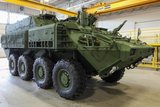
The network showed footage of mine-resistant US-made military vehicles no longer in coalition custody and said US weapons could be ordered for purchase in a market.
‘We take allegations of misuse of US-origin defense equipment very seriously, and initiate investigations promptly upon receiving credible evidence,’ Pentagon spokesperson Johnny Michael said. Any investigation would ultimately be conducted by the US State Department, which said it is aware of the report and is seeking additional information.
‘While battlefield losses of equipment do occur in active conflict zones, we expect all recipients of US origin defense equipment to abide by their end-use obligations and not retransfer equipment without prior US government authorisation,’ a State Department spokesperson told AFP.
Yemen’s rebels are mired in a war with government forces backed since 2015 by a Saudi-led coalition. The conflict has triggered what the UN calls the world’s worst humanitarian crisis, with millions of people at risk of starvation.
The Republican-controlled US Senate in December approved a largely symbolic resolution to end US military support for Riyadh’s intervention in Yemen. Washington has also carried out a long-running drone war against Yemen’s Al-Qaeda branch, which has taken advantage of the chaos in Yemen to strengthen its own operations, particularly in the country’s south.
The Pentagon sees Al-Qaeda in the Arabian Peninsula as the jihadist network’s most dangerous branch, and has intensified its strikes against AQAP since President Donald Trump took office in 2017.
In Iraq in 2014, as the national army collapsed in the face of an onslaught by the Islamic State group, much of the Iraqis’ US-provided weaponry was captured by the jihadists and used in their rampage.

You may also like
More from Defence Notes
-
![From systems integrator to multi-domain solutions provider (video)]()
From systems integrator to multi-domain solutions provider (video)
Philipp von Brandenstein, Head of Corporate Communications at Rheinmetall, explains how Eurosatory 2026 marked a new stage in the company's evolution.
-
![US Pentagon pushes for major reform of defence acquisition system]()
US Pentagon pushes for major reform of defence acquisition system
The US Department of Defense has requested new contracting authorities from Congress, using the Army's MV-75 Cheyenne programme to demonstrate how competition, digital engineering and closer industry collaboration could accelerate acquisitions.
-
![US speeds up B61-13 nuclear bomb production as programme moves further ahead of schedule]()
US speeds up B61-13 nuclear bomb production as programme moves further ahead of schedule
The US government plans to accelerate production even further after achieving key B61-13 milestones months ahead of schedule, as the programme advances amid growing US-China strategic competition.
-
![Canada’s C$2 billion ACSV deal reinforces new defence industrial strategy as allies align]()
Canada’s C$2 billion ACSV deal reinforces new defence industrial strategy as allies align
General Dynamics Land Systems-Canada is the country’s first strategic partner under the Defence Industrial Strategy’s Strategic Partnership Framework, an effort to provide companies with confidence to invest and boost the defence labour force.
-
![New UK armed forces minister frames High North defence as vital to “homeland security”]()
New UK armed forces minister frames High North defence as vital to “homeland security”
The UK’s Minister for the Armed Forces Louise Sandher-Jones made her first appearance in the role before the House of Commons Defence Committee this week to highlight efforts to improve capability in the High North.
-
![Canada seeks to strengthen industrial ties with the US on classified programmes]()
Canada seeks to strengthen industrial ties with the US on classified programmes
Ottawa explores expanding defence-industrial cooperation with Washington into sensitive programmes, an approach that could reshape NORAD modernisation, strengthen North American supply chains and create new opportunities for defence contractors.